Mission
“We speak one language: Antiochian”: More Thoughts on the Future of the Antiochian Archdiocese and Orthodoxy in America
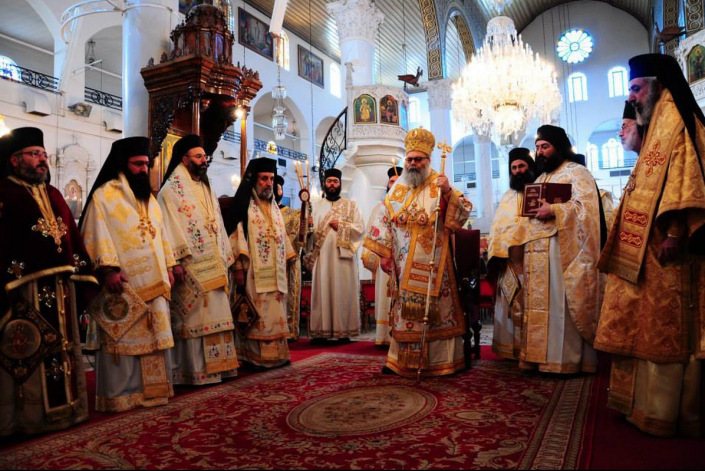
If you’ve done any reading from modern Orthodox saints, you know that there is a certain tone among the holy elders of Greece, another from Russia and so forth. Each culture enculturates the Gospel in its own authentic way and speaks of the truth of Jesus Christ with its own voice.
One of the things which makes the particular Antiochian voice distinct—although it is often not well known here in America, as I wrote in my previous post—is that it is not tied to any single ethnicity or culture. The ancient cultures and languages that have called Antiochian Orthodoxy home are diverse—Syriac, Greek, Georgian, Arabic, Cypriot, Central Asian—as are those which now are also home to the Antiochian church—English, American, Central and South American, Turkish, Australian, French, German and others. Ancient Antioch itself was a cosmopolitan city even in the time of the Apostles, and while the city of Antioch of today is now a small Turkish municipality, the spirit of Antiochian identity in its Christian form has remained cosmopolitan and multicultural. Some folks today equate Antiochian with Arabic, but that identification has never really been accurate.
Indeed, one of the greatest voices of the Antiochian church in America, St. Raphael of Brooklyn, regarded himself as being a man who identified with many peoples: “I am an Arab by birth, a Greek by primary education, an American by residence, a Russian at heart, and a Slav in soul.”
Yet while the voice of the Antiochian tradition is spoken in many languages and cultures, there is nevertheless a single “Antiochian language,” so to speak, a particular way of being and speaking in the Orthodox Church that is distinct.
I have been talking about this “Antiochian language” recently with friends who know it far better than I, and one of them mentioned to me a phrase used in the Arabic-language publishing and social media of the patriarchate, which gives this post its title: “We speak one language: Antiochian.” It has also been rendered in English as “Our Language is Antiochian. Our Language is One.” This certainly is not a reference to the Arabic language but rather to a kind of spiritual language, that particular voice which is the spirit of Antioch.
With the attention that our archdiocese here in America has received lately from the Patriarchate of Antioch, our connection to that Antiochian language has been strengthened, and I’ve noticed a particular tone—hard to describe, but definitely distinct. If I had to put adjectives to it, I might choose: accessible, direct, refreshing, bright, earthy, peaceful. It is not dark or hard, but it is also not too yielding or liberal. It is loving and un-self-conscious.
A bridge is being built between ancient Antioch and her children here in North America, and now there is traffic on that bridge, a kind of spiritual commerce and economy that has its own idiom. For many, this may be the first time that someone has “spoken Antiochian” to them. It is not that this has been absent from our archdiocese, but we have simply not had access to it in the way that we have over the past several weeks.
As I said, though, that voice is hard to define with adjectives, so I would like to give a few samples, both ancient and modern, which to me all sing in the same spiritual key, which speak with the same spiritual voice. The subjects are different, but the tone (to me) is the same:
Blessed is the person who has consented to become the close friend of faith and of prayer: he lives in singlemindedness and makes prayer and faith stop by with him. Prayer that rises up in someone’s heart serves to open up for us the door of heaven: that person stands in converse with the Divinity and gives pleasure to the Son of God. Prayer makes peace with the Lord’s anger and with the vehemence of His wrath. In this way too, tears that well up in the eyes can open the door of compassion.
- St. Ephrem the Syrian, “Armenian Hymn No. 1,” 4th c.
St. Ephrem is of course familiar to many Orthodox Christians, and he is not often thought of as “Antiochian” exactly, but this tone is still there. (And one recognizes the Semitic image of God’s “wrath” there, of course.) I especially love the phrase “close friend of faith and of prayer.”
Fast forward several centuries, and that same feeling is still there. Here’s Sulayman al-Ghazzi (Solomon of Gaza), an Arabic-speaking Palestinian bishop from the 11th century:
Not all baptized with water are Christians
Without the baptism of the life of the world to come;
In Christ the peoples of the earth have been baptized
Though some of them afterward showed hypocrisy.
They became like a body’s parts in its natural state—
Some helpful, some unreliable.
How many patriarchs are unpraiseworthy in their service,
Miserable bishops and metropolitans,
Who are among the heretics, in place of truth,
Preferring falsehood and slander!
Over them, God has favored a Church
Whose stones are gathered from all corners and climbs.
Truth has built her edifice
Rising to heaven on pillars and columns,
Fashioned from chrysolite,
Precious stones, sapphires, and pearls.
Her foundation is the rock of faith,
Rooted deep with pillars and walls.
All bodily creatures are pleased to see it
When it appears in races and colors,
Byzantines, Russians, and Franks
Joined with Indians, Khuzestanis, Abkhaz, and Alans
Armenians and Pechenegs in agreement
With the people of the Jazira, namely Harran.
And Copts too, in the Lower Egypt father together
From Upper Egypt to Qus and Aswan.
People of Shiraz and Ahwaz in harmony
With Iraq, unto furthest Khorasan.
From the place of the sunrise to the place of its setting,
To the Euphrates, to Sihon and Gihon.
White, blond, and brown in their churches
Praise God with the yellow and the black.
All of them have come to the religion of Christ
And are guided, gaining profit from loss.
Seventy nations, each with a language
Branching off from one Syriac tongue.[*]
Hebrew was the speech of God’s apostles
Before they set out with the mission of the Gospel.
Each apostle gained a language,
Beautiful, reliable, and clear.
Not out of weakness but having heard proof,
Those to whom they preached responded with faith.
So they spread out among their nations,
None fearing the devil’s wiles.
When their service to God was done, they slept,
Having roused many sleepers.- Suleyman al-Ghazzi, from “Not All Baptized with Water Are Christians” (trans. Samuel Noble), in The Orthodox Church in the Arab World 700-1700: An Anthology of Sources, pp. 163-164
[*] Medieval Arabs, both Muslim and Christian, generally held that Syriac was the language spoken by Adam and Eve.
And roughly 1,000 years later, we still hear this same direct, refreshing voice from the leaders of the Orthodox Youth Movement:
The Church is the salt of the earth and completes the work of Christ in the world. The Church works, she is present, for the sake of the salvation of the world. We can say that she is the center of being, in her its destiny is achieved. The world corrupts and ages, but the Church is continuously renewed for the sake of the salvation of the world. But if the salt is corrupted, then how can it be salty?
The Church is the group of those who believe in the Lord Jesus and who have united around him to live the life of the Gospel, the life of God. They have no concern except to follow the Lord’s teaching and to follow in his footsteps. The group is in the world and for the world, but at the same time it is not of the world. From the beginning, from the ascension of the Lord to heaven, it is oriented toward the age to come, awaiting the return of the heavenly bridegroom and hastening him on. From now on, it lives in the last days, in the fullness of time, “it uses this world as though it doesn’t use it, and buys as though it doesn’t own.”
- Fr. Elias Morcos, “On Revival in Antioch,” 1964
We become children of the Resurrection when we become bridges of communication and encounter between those who are separated, and between those who are in conflict. Let us be bridges exactly like the Lord who did not ask anything for Himself, but gave the world everything, to such an extent that He offered Himself for the salvation of the world. Let us serve as ways of rapprochement for all. Through love, sacrifice and in deeds and truth we shall build our countries.
We become children of Resurrection when we live our faith in genuineness, depth and meaningfulness. External expressions are bound to change with cultures and ways of living, but the genuine Christian content preserves the trust which has been handed down to the saints under many different circumstances, cases and cultures. Let us imitate the courage of Christ who did not fear anything, even death. Instead He faced the cross with love and brought us to resurrection. Let us face the cross of this crucified East with overwhelming love for all those who are crucified on it, until we reach with them the resurrection we all expect. Let us live these painful days in simplicity, enjoying the bare necessities of life and experiencing the true wealth which is life with God….
Last but not least, we do not forget that God is the Lord of history, so we may always hold to patience and hope which do not fade away. Let us remember the words of the prophets and how much they called, in times of distress, for repentance and faith, until God intervenes and removes the distress. In these troubled days we are witnessing, we are in sore need of faithful witnesses. Let us move out of our distress with more faith, more purity and greater loyalty. When we understand that we only need God and no one else, the effects of resurrection will appear in us and in all our humanity. When this happens all around us shall be transfigured.
- Patriarch John X (Yazigi) of Antioch, Pascha 2013 Pastoral Letter
How should I conduct myself at Pascha? I try to become the Gospel, to become the word so that people may read me and live. Christianity is faces that are illumined in order to give light. This is the living Pascha. It is what causes me to pass through people to the Father’s face. How should I live? “I do not live, it is Christ who lives in me.” Christianity is not a religious system. It is love- that is, clinging to Christ such that you forget your own face in order to see His face and the whole world in His face. If we are people of Pascha, then we are in a state of constantly going beyond ourselves and the world in order to become Him and for Him to become us. It is not a matter of systems and it is not a matter of theoretical principles. Everything is His face, until all faces pass away or we read Him traced upon them.
- Metropolitan Georges (Khodr) of Mount Lebanon, “Who Shall I Be at Pascha?“, 2014
And now this “Antiochian language” is also being spoken to us here directly in America by the representative of our patriarch:
Christ defeated death in our lives! He set us free from fear: from fearing death, from fearing evil, from fearing illness and calamities, from fearing each other, from fearing the uncertainty of the future, from fearing insecurity and unemployment, from fearing violence and terrorism, and from fearing persecution and sufferings for His sake. Instead, He gave us the power and the means to seek the true freedom. The freedom to love each other even though we differ in character, education and profession. The freedom to forgive each other even though we have suffered. The freedom to ask forgiveness from each other even though we have badly hurt each other. The freedom to serve each other even though we differ in origin, background and culture. The freedom to work together even though we differ in thinking, worldview, ability and capacity. The freedom to abide by the truth and raise our children to seek Him. The freedom to defend the unjust and the needy and restore them their rights. The freedom to be at the Lord’s hand, obedient, prayerful and faithful.
Christ defeated death in our reality! He gave us the gift to start anew, to renew our heart, to purify our mind, and to reaffirm our commitment of faith at His service. He restored in us the dignity of our person, the beauty of our nature, and the bounty in our personality.
Christ defeated death in our relationships! Christ is the only mediator between God and man. However, He made us “bridges” of salvation to reach others. As Antiochian Orthodox Christians in North America, we are bequeathed an apostolic “lineage:” tradition, inheritance and mission. In this regard, the image of the “bridge” summarizes the Antiochian witness that emerges out of the past, prompts the present and prepares the future of the Antiochian Orthodox Church on the eve of the election of a new Metropolitan to succeed to His Eminence, Metropolitan Philip of eternal memory.
- Metropolitan Silouan (Moussi) of Argentina, “How to Resurrect with Christ: Pascha 2014 Pastoral Letter“
I could give many, many more examples, and of course you can find a good bit of this sort of thing on the Notes on Arab Orthodoxy weblog. But I hope that these passages will suffice to give you some sense of the tone of “speaking Antiochian.” It is different from other languages, and while many of its speakers are these days from the Middle East, it is not the same thing as speaking Arabic, and there is no reason why non-Arabic speakers or people from outside the Middle East cannot speak it. It is a beautiful language, and it speaks to us of our Savior Jesus Christ with a peculiar accent and vocabulary of its own, itself building a bridge between persons, between peoples, and between mankind and God.
As I wrote last week, my hope for us Antiochians here in America is that we may hear more and more “speaking Antiochian” to us, so that we may better learn this beautiful language. And in so doing, not only will our own faith be strengthened, but we will also have something beautiful to offer to our Orthodox brothers and sisters throughout America.
Share this:

Light from Antioch: The Future of the Antiochian Archdiocese and Orthodoxy in America
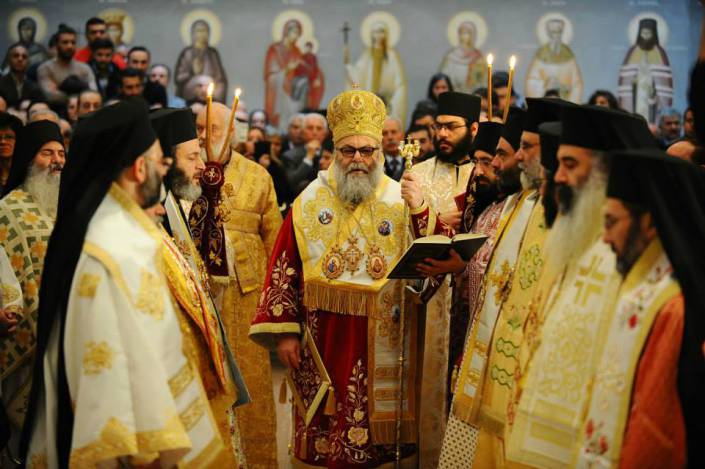
Notes: The following is a personal reflection and represents only my own views. This piece is also available as an audio recording via Ancient Faith Radio.
This past Friday, I had the blessing along with other clergy of the Diocese of Charleston and Oakland and also the Diocese of Washington and New York to meet with His Eminence, Metropolitan Silouan (Moussi) of Argentina in Washington, DC. Sayidna Silouan’s purpose in calling this meeting, as well as many other similar meetings throughout North America, was to hear the voices of the clergy and faithful of the Antiochian Archdiocese of North America, to hear what they yearned for in their future, in the light of the transition that is now upon us, namely, that within a couple of months we will be in the care of a new Metropolitan. +Silouan’s role here in North America is Patriarchal Vicar, and he is essentially in charge of the archdiocese until a new Metropolitan is elected. He serves as the voice of the Patriarch of Antioch in our midst.
The table where we met seemed to be mostly filled with listeners (which is a good thing in the clergy), but a few of us spoke when Metropolitan Silouan asked us directly to tell him what our hopes were. In his initial remarks on this, he said something that stuck with me: “Thinking according to the constitution is good, but thinking as the Church is better.” I’ll say more on that in a moment.
The other clergy who spoke mainly talked of their desire for the unity of the archdiocese to be kept intact, that we should not be divided. And +Silouan mentioned that he had been seeing peace everywhere in the archdiocese, wherever he went, that no one had to tell us to be unified and at peace, but that we simply were. And I have noted that this theme seems to be repeated in a number of the conversations between Antiochians I have been privy to. I have also noticed in my more than 16 years of experience in the archdiocese that there really is a common identity, a brotherhood among us. It would be a shame for that to be harmed in any way.
Some seem to believe that that unity would be harmed if, for instance, the archdiocese were divided into multiple metropolitan districts, “every bishop doing his own thing” in the words of one comment I read online. And that is typically contrasted with the system we have recently had, namely, a single ruling metropolitan with auxiliary bishops who served entirely at his blessing.
We also had a different system in place for a few years after the grant of self-rule, which was another iteration of the vision of Metropolitan Philip for our archdiocesan unity—diocesan bishops with more of their own authority in their dioceses, yet with a strong metropolitan at the head of the archdiocese. This was actually a traditional metropolitical system, in which the bishops on a synod do everything “with him who is first,” while the one who is first also does what he does with the consent of all. And it’s clear to me from my reading of Church history that there are many possible models that we could adopt which need not be read as “dividing the archdiocese.”
The exact details of how bishops who sit together on a synod presided over by their metropolitan can all work together and remain united and still have authority emphasized on the primate can have lots of different sets of details to define them. (Examples: Are finances shared? Is authorization of ordinations centralized? Can each diocese have its own educational institutions? Can bishops found churches and monasteries on their own?) I don’t see why any conversation about these things has to devolve into only two iterations—1) a sovereign metropolitan with auxiliaries or 2) fully independent dioceses each headed by a bishop who owes no particular allegiance to the metropolitan. These things sit along a continuum with numerous points in between, and they can all contribute to the question of unity.
This kind of thing seems to be on many people’s minds. But I have to admit that what comes to my mind when I think about the unity of the Antiochian Archdiocese and what came to my mind especially when Metropolitan Silouan asked us what we wanted for our future didn’t really have much to do with all these administrative details that are, to be honest, above my pay grade and not in my purview. I’m just a parish priest.
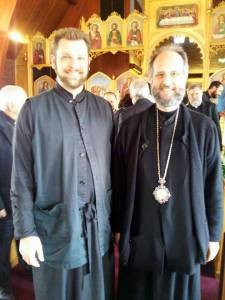 But +Silouan’s words stuck in my mind:
“Thinking according to the constitution is good, but thinking as the Church is better.”
I do not mean this as any slight to my brothers and sisters, but it seems to me that, while discussion about administrative details and rules (“thinking according to the constitution”) is important, there is something of greater importance that I hope will become more part of our conversations, especially as we head toward our special nominating convention on June 5. And what is that? It is our spiritual inheritance as Antiochian Orthodox Christians.
We rightly often speak of Ss. Peter and Paul and Ignatius of Antioch, and I love those parts of our tradition. But there is actually a great wealth of spiritual riches that have been developing in the Antiochian Church recently, as well, and it is almost entirely unknown to Antiochians in America.
To give but one example of this, one of the major developments of the 20th century in the patriarchate was the founding of the Orthodox Youth Movement. This movement was founded in the 1940s and was the instrument of an astonishing spiritual renewal over the decades that followed. It not only produced abbots, bishops and even patriarchs (Patriarch Ignatius IV was one of the founders of the movement), but it began church schools, founded and revitalized monasteries, emphasized personal holiness and asceticism, and rapidly expanded theological education throughout the patriarchate. It was a powerful and thoroughgoing reform movement that radically reshaped a church that, sad to say, had been moribund with nominalism for quite some time.
The results of the Orthodox Youth Movement, which celebrated its 70th anniversary in 2012, are a vital and spiritually rich Antiochian church in the Middle East, a church which even now is showing its spiritual strength as it endures crucifixion anew. Thanks in large part to the movement, there are now monasteries where there were none. There are charitable programs where there were none. There is theological education. There are holy elders. There are not just old monasteries that were previously on the brink of abandonment and are now filled with monastics, but there are even new monasteries.
And most Antiochians on this continent have no idea about any of this. Much of it, I only learned about recently myself.
So what did I say to Metropolitan Silouan when he asked us what our hopes were?
My hope for the future of the Antiochian Archdiocese of North America is that we can receive some of these great spiritual riches.
 Why is it that an Orthodox Christian in America can easily access the 20th century holiness of Elder Paisios, Elder Sophrony, St. Silouan, St. Porphyrios, St. John of Kronstadt, Elder Cleopa, etc., and not feel that they are becoming Hellenized, Russified, Romanianized, etc.? These holy people are naturally attractive to us, because they are saints, and their holiness transcends cultural barriers. But why are we almost entirely ignorant of the immense spiritual power of Orthodox Christianity in the Middle East?
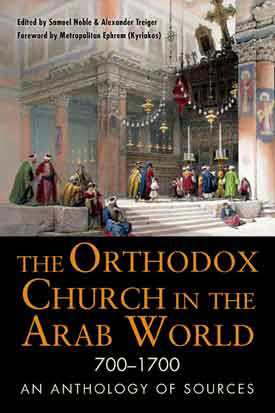
There are probably a lot of answers to that question. One of them is that not much is getting translated from Arabic to English. We are blessed to have the Notes on Arab Orthodoxy weblog to help us connect to that great spiritual wealth, and its author has recently contributed to a new volume to help us connect with some of that historical inheritance, too: The Orthodox Church in the Arab World 700-1700: An Anthology of Sources (a wonderful book I recently got a copy of, by the way). But there needs to be more of that kind of thing—a lot more.
There is a beautiful, vast treasure trove of Antiochian spirituality that most Orthodox Christians in America—even Antiochians—are mostly unaware of.
One of the things that has struck me profoundly during the past several weeks since our father Metropolitan Philip reposed in the Lord is how immediately and how refreshingly our patriarchate has become involved with us. I am not part of the “administration,” but I have not felt for one moment that we were “under” some “foreign bishops” during this process (something one often hears within Orthodoxy in America). Rather, my feeling has been that we are being attended to as family by family, that we are being loved by spiritual fathers who really care what happens to us.
All this brings us to the question of what this attention from the patriarchate might mean. It certainly has not seemed to me to be overbearing in any way. Some have suggested that it means that the patriarchate wants to draw us closer to itself so that there may be more solidarity between us. Some fear that this may mean “Arabization” (for whatever that might mean). Some fear that this may put administrative unity in Orthodoxy in America in some jeopardy, i.e., if the American Antiochians become more Antiochian, they will be less American.
I cannot answer all of those fears, because I do not know what the future holds. But I will give one example to address one of them. For some folks, “Arabization” might mean a new emphasis on the Arabic language in worship. That would of course be a tall order, since roughly 3/4 of our clergy are converts and most converts have no knowledge of Arabic. But I do not think it would be ordered at all, to be honest. We have a patriarchate that has parishes in Turkey, just over the border from Syria, that worship in Turkish—not Arabic. We also have a patriarch who, when he was assisting with parishes in Europe, insisted on taking an intensive English language course so that he could both liturgize and preach in English before he visited any parishes in the United Kingdom.
What I would like to see is a new infusion of the spirit of Antioch, a new and increasing access to these spiritual riches—Middle Eastern saints and elders, monasticism, vigorous and traditional Byzantine music education, mutual visits, etc. In short, we are a family that needs to become closer.
None of this is meant to be a criticism of Metropolitan Philip, by the way. He was the man for his time—a great man—and he accomplished many remarkable things. And I felt a personal loss at his death. At the same time, I am also reminded of words spoken by Archbishop Joseph at Sayidna Philip’s burial, when he was speaking of what the new Metropolitan would need to do:
“David fought the wars, but Solomon built the Temple.”
I don’t pretend to know exactly what he intended that to mean, but one interpretation that occurs to me is that +Philip fought many wars and was a victorious warrior. And the next Metropolitan now has an opportunity to take us to another level, a place where the spiritual depth of Antioch is brought to us in even greater power.
So what does all this mean for our fellow Orthodox Christians here in America who may wonder if the Antiochians might become too preoccupied with being Antiochian to be as concerned with administrative unity?
Just as all the other Orthodox traditions in America each have their own contribution to make to the Orthodox Church here, the Antiochians do, as well. And we should bring our very best to the table. Frankly, there is a lot in our own tradition that we haven’t accessed yet. And I want it for myself and for my own children. And it’s not out of any ethnic sentiment on my part that I want it—I’m Lithuanian (though I barely know what that means). I want this stuff because it’s a whole world of holiness to explore.
So that brings me to my final point, which I believe answers both the question of unity in the Antiochian Archdiocese and also unity within Orthodoxy in America:
The more authentically Orthodox Christian we become, the more united we will be.
The root of all division is sin. And the basis for all true brotherhood in Christ is holiness. It’s really pretty simple. So if each of us adheres more closely to what is best within each of our traditions (without ignoring other traditions, of course), then we will become one. Administrative issues are really secondary to the question of spiritual renewal, and if there is authentic spiritual renewal, the administrative issues will work themselves out a lot more easily.
So my hope is this: If anyone in the Holy Synod may happen to read this, and if any Antiochian or any Orthodox Christian happens to read this, that all our prayers will be joined together in the Holy Spirit so that the outcome of the next couple months’ deliberations pertaining to the Antiochian Archdiocese of North America is this:
Whatever might happen with the election of a Metropolitan or even questions of how we are to be administered, may it open up new channels for the abundant streams of grace from the Antiochian tradition to flow to us here in North America.
May God’s will be done.
Share this:
Raising Authentically Christian Children: Good News and Bad News
My friend Seraphim Danckaert published an article today on the O&H site that I think every Christian (Orthodox or not) should read: Losing our Religion: On “Retaining” Young People in the Orthodox Church. Why? Almost every kind of church throughout America is losing kids. So read it first before reading the rest of this.
Okay, done?
First, some bad news: If you’re counting on your church having awesome programs for your kids to make them be and keep them being good Christians, you’re going to be let down. There is only so much they can do, and expecting that they will do all the heavy lifting in your child’s spiritual life is extremely unrealistic. On a personal note, I’ve spoken with many 20- and 30-somethings who were very active in youth groups, Bible studies, outreach projects, etc., who all checked out of church after they left home. Their problem wasn’t that they weren’t active in public religiosity. It goes deeper, to the day to day stuff. Follow the path home. That’s where they learned to be adults. If the faith isn’t visible at home, which should be regarded as a “little church,” then it’s not going to be visible when your children start their own homes. You cannot outsource the spiritual side of parenting. And simply taking them to Sunday School (even consistently, which itself doesn’t seem to happen often any more) isn’t enough, either.
Okay, some good news: This piece is good news for all those parents who are striving to make their faith real in the home. Mothers especially are the heroes here, but fathers are critical, as well. Pray together with your kids, and not just over meals. Pray before they go to bed and at other times. Read the Bible to them. Read saints’ lives to them. Talk with them about what you read. Let your kids hear you talk about your faith, your hopes, your trust in God, your wish that you could spend more time in church, more time in prayer. Let them see you reading the Bible and other spiritual books. When you’re alone in your study and praying and your toddler sneaks in to play with forbidden things, pick him up and keep praying. All that agonizing you’re going through to make faith alive in your home is not in vain.
Another obvious conclusion is that you shouldn’t choose godparents for your kids based purely on familial or friend relationships. Your child needs to have an adult spiritual mentor who will model adult faith. Your pastor probably cannot be that person, not just because he cannot be an at-home part of your child’s life with great frequency but also because his status as a clergyman puts him outside the “role model” world for most kids. Most kids don’t imagine themselves as clergy, but they are more likely to imagine themselves to be like an aunt or uncle or close family friend. Imagination is critical in terms of spiritual possibility. If a child knows what it looks like to be a serious Christian adult, he’s more likely to be able to do it.
Regarding Seraphim’s third point, that a child needs not only authentic home spiritual life and a non-parent spiritual mentor, but that he also needs to have a spiritual experience of some kind before he hits his late teens, well, that can be a bit harder. You can’t make a kid experience the grace of God. But one thing we can count on is that there will be crises. And the direction we go when we experience a crisis will very much determine whether we experience grace. Do we model for our kids that we take such things to our pastors and into the sacrament of confession, that our first remedy is prayer and fasting? Or do we look for other solutions? (This is not to say that sometimes medical help may not be validly required, but it shouldn’t be sought out to the exclusion of spiritual guidance.) Someone who is raised going to confession regularly (not just once a year!) will likely think of his confessor as a go-to resource for dealing with a crisis. And while there’s no guarantee, he’s more likely to experience God’s grace there than if he turns to some other remedy.
I write all this in the context of working on the youth ministry in my own parish. It seems to me that it should probably mostly be geared to teaching how to make all these things a part of daily life, not just making time to get together and be spiritual and/or religious for a while and then go home. I also write this in the context of learning how to be a better father to three little Christians. I’m no expert. But I’m working on it. And I’m glad my wife is working hard on raising our children as Christians, too.
Share this:
12 Reasons Why I Became and/or Remain an Orthodox Christian
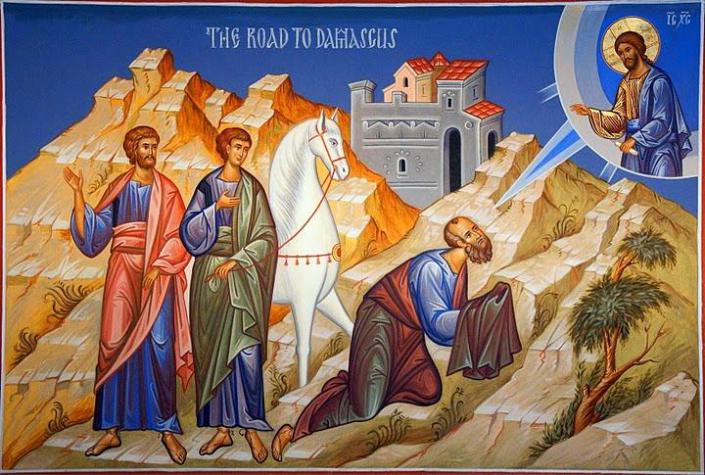
Lists like this are usually so much clickbait, I know, but I thought it was nevertheless worthwhile to compile a list of most of the reasons why I became and/or remain an Orthodox Christian. Some of these things were not really on my radar when I became Orthodox in 1998, but they are part of the reason why I genuinely do love belonging to the Orthodox Church (which is why “and/or Remain” is in the title).
The nature of lists like this is such that they can’t constitute apologetics, really, nor is this one (at least) intended to be universally applicable — these are my reasons. They may not be someone else’s. It will also become apparent that my background as an Evangelical prior to becoming Orthodox is a major factor here. So, all that said, here’s the list.
1. I believe the Orthodox Church really is the one, true Church of Christ.
There’s a lot that could be said here, but the reason why I believe this is that I examined both the Scriptures and the early history of Christianity, and I became convinced that the only church that matches them both is Orthodoxy. Particularly formative for me were the writings of St. Ignatius of Antioch, a disciple of the Apostle John. The church life he described was definitely not what I saw in Evangelicalism. Since he was someone who learned how to be a Christian from the Apostles themselves, I wanted to be in his church.
Orthodoxy takes history seriously and doesn’t gloss over the hard stuff. It also doesn’t pick and choose from early Christian witness to develop a streamlined “system” of theology that is easy to swallow. Rather, because Orthodoxy is truly the community descended from the Apostles, within its theological memory are centuries of dogma, doctrine and theological reflection. Not all of it is totally consistent or easy to sort out, but it is nevertheless one great river of truth with an overall unified direction. One doesn’t see that in the same way in Roman Catholicism (there are several major turns in history), and it is impossible to find that in Protestantism. Most Protestants aren’t even concerned with it.
None of that means I regard non-Orthodox Christians as damned, nor do I even regard all Orthodox Christians as definitely destined for eternal bliss. And Orthodoxy’s truth is no testament to me. Orthodoxy is true, but not because of me.
2. Orthodoxy gives me something to do.
I don’t mean that I was bored and needed something to entertain me. I mean that the Christian life as I had been taught it prior to becoming Orthodox was essentially non-critical. I had been “saved,” and there was really nothing critical to do after that. I should try to be moral, of course, and get other people to get saved, too, but those things weren’t really necessary to the big question, which was: “Do you know what would happen to you if you died tonight?” Well, I knew. I was “saved.” I was going to Heaven.
But what if spiritual life is actually all critical? What if you need to endure to the end to be saved? What if being a Christian means working out your salvation with fear and trembling? Orthodoxy provides a full-bodied, full-souled spiritual life that assumes that everything you do as a Christian makes you either more like God or less like Him, and because becoming like God is what salvation consists of, that means that everything you do is critical. You haven’t “arrived” in this life. You should be moral and you should be evangelistic not because they get you bigger rewards in Heaven but because those things are part of what it means to cooperate with God so that you can be saved.
3. Orthodoxy gives me a way to see and touch God physically.
The Son of God became the Son of Mary, and that means that He became visible and touchable. In Orthodoxy, the implications of the doctrine of the Incarnation are that the divine presence — holiness — actually becomes present in the material world. Now, one can argue that that presence is uniquely present only in one physical place — the human body of Jesus — or one can be consistent and see how holiness shows forth in lots of other physical places both in the Bible and in subsequent Christian history. Saints’ bones, apostles’ shadows and even handkerchiefs touched by apostles have all showed forth the power of God.
Within that context, when Jesus said “This is My Body” and “This is My Blood,” it makes more sense to take Him seriously and not just metaphorically. That’s why St. Paul warned that people who received Holy Communion unworthily could get sick or even die. If it’s “just” a symbol, why would it do that?
The physicality of Orthodoxy — sacraments, incense, vestments, church architecture, icons, etc. — don’t get between me and God. They put me in touch with God. A bridge between two cliffs does not get between the cliffs but rather connects them. Orthodoxy’s many physical elements not manmade magic, but the working out of God’s gift of the Incarnation, the reconnecting of God and man.
4. Change is really hard.
People sometimes joke that Orthodoxy is not really an “organized religion,” with emphasis on “organized.” There is no pope handing down uniform instructions to the whole Church; our chiefest prelates often can’t seem to get along; and it seems like we’re never going to get around to holding that Great and Holy Council we’ve been talking about for nearly a century. But all those things don’t bother me. For one thing, it means that sheer logistics make it nearly impossible for us to alter what we do.
And if all that Eternity and Truth stuff is really true, why should we even think about altering it? It can’t get voted on democratically, and it can’t get imposed monarchically. So change doesn’t much happen. That’s not a bug. It’s a feature. Orthodoxy is not going to change out from under you.
That lack of organization also leads me to love Orthodoxy for another reason, too:
5. Orthodoxy really is one Church.
Unlike the denominationalism of the Protestant world, the various churches of Orthodoxy really do have to talk to each other and work things out. A Presbyterian and a Lutheran may each recognize each other as Christian, but they have almost no stake in each other’s internal church life. The same even holds true of someone belonging to the PCA and someone belonging to the PCUSA (both Presbyterian denominations). They don’t have to work anything out between them. A PCA church plant does not in any way infringe on the territory of the PCUSA, because they’re not the same church.
Orthodoxy may often bicker and fight (though most parishioners never see this unless they happen to be in a dysfunctional parish), but the fact that we have such bickering and fighting with each other means that we recognize in each other that we are one Church, that we have a problem and that we need to fix it. Protestants always have the option of just splitting (and once splits occur, they don’t have to bother with each other), while Roman Catholics can ultimately appeal to the Vatican, who can impose solutions that work for the Vatican but might not work for everyone else involved.
6. Orthodoxy is a faith for the whole life.
Because Orthodoxy comes with a vast set of expressions of its tradition, you can never exhaust it all. There is always something new not just to learn but to become. While we don’t really “arrive” until the next life (and I’d argue even that is not an arrival; that is, it’s not the end of the road of salvation), there are many way-stations in this life that delight and grant joy. The difference between Orthodoxy and Evangelicalism in this regard is that I’m talking about not just growing in wisdom, which is common to all religious traditions, but that Orthodoxy tracks many stages of spiritual development throughout a whole lifetime.
I remember one time hearing a monk explain the response he got from a holy elder on Mount Athos after asking him many questions. The elder replied that some things just wouldn’t make sense to him until later, until he’d received some level of illumination (theoria). It’s true. One cannot read a “Statement of Faith” from Orthodoxy (not even the Creed) and say, “Ah, yes. That is everything Orthodoxy teaches. I understand it now.”
Again, that’s not a bug. It’s a feature. Yes, we like things to be simple, to be readily accessible to everyone, but any faith that is not complex enough to address all the complexities of human experience is not worthy of the dignity of mankind. Orthodoxy provides that in a way that I haven’t found anywhere else.
7. Orthodoxy is a faith for the whole world.
There are no “target demographics” for Orthodoxy. We don’t do market research to figure out how to attract young people, old people, urban people, suburban people, or whatever particular demographic we might desire for our parish. A parish can often have a certain degree of commonality among members, but that isn’t by inherent design. There was no committee that met saying, “How do we get the 30-something suburbanites?”
Yes, Orthodoxy is sometimes plagued with ethnocentrism. But that’s a distortion of Orthodoxy, not faithfulness to it. And it’s not everywhere. I’ve belonged to both more ethnically focused and less ethnically focused, as well as ethnically non-focused Orthodox parishes, and none of them had an ethnic membership card check at the door. Orthodoxy is really a universal faith that has shaped numerous cultures and languages over many centuries.
If people as diverse as Arabs, Greeks, Serbs, Georgians, Russians, Estonians and Finns can all sing the same faith, and if both their young and old can sing it together, then truly, anyone is welcome. (Some Orthodox need to remember that more than others, though.)
8. Orthodoxy is a faith for the whole person.
Mankind is not just emotionally moved by beauty, but he aches to be near it, to create it as much as that is possible. More than any other iteration of Christian faith, the Orthodox Church knows how to envelop the worshiper with beauty in all five (or more!) senses, both otherworldly beauty that transports the worshiper and otherworldly beauty that transforms the earthly.
One might describe this as aesthetic, but it is not “mere” aesthetics in the sense of something that appeals only to the senses, perhaps for entertainment value, but goes nowhere in particular. This is aesthetic in the sense that God Himself is beauty. That is why Orthodoxy, while sometimes homely or homey, is never cheesy. It is timely and timeless, but not “contemporary.”
The beauty of Orthodoxy addresses the whole human person in multiple ways. It is not a faith just for the “soul” or the “heart,” but for the body, as well, including our ability to apprehend beauty.
9. God really does love you the way you are, and He loves you so much, He won’t leave you that way.
There seems to be a constant battle these days, especially within Protestantism, over whether God should be perceived as loving or as a judge. Even those who preach that God is love still tend to preach a God Who is angry at you for your sins and has to be appeased. But Orthodoxy preaches the God Who is consistently loving, a God Who loves with such strength that His love will change you, if only you will cooperate with it. The change won’t be lousy, either, turning you into some goody-goody prude. Rather, it will be a change into authentic personhood, where virtue is striven for because of communion, not because of adherence to arbitrary rules.
10. Orthodoxy is both mystical and rational.
Some Orthodox will oppose the mystical to the rational, but that’s a mistake, I believe. For all the apophatic theology (theology which emphasizes our inability to know God with our minds), there is also a lot of cataphatic theology (theology that makes clear, positive truth claims) in the tradition of the Church. We don’t have to choose one or the other, nor are the two really alternatives to each other. Apophatic theology is also not merely a “corrective” to cataphatic theology. Rather, both are simply ways of talking about theological emphases within Orthodoxy.
It is not as though, when I am serving the Divine Liturgy, I switch on the “rational” part when preaching the Gospel and then toggle the switch to “mystical” when I drink from the Chalice. All these things are in play simultaneously. I love that, and I haven’t really encountered that anywhere but in the Orthodox Church.
11. Orthodoxy is ascetical.
No Christian body takes asceticism as seriously as Orthodoxy does. Roman Catholicism has it in its tradition, but it is mostly ignored. Yet Orthodoxy expects all Christians to fast, to stand vigil, to be as non-possessive as possible, etc., and it provides a programme for how to do that. You don’t have to make it up for yourself, because the tradition is already established. And it’s also customizable according to the pastoral discernment of your father-confessor.
Asceticism is a way to do real battle with the broken modes that the human will functions in. It allows a man to take control of himself in a powerful way so that he can redirect his God-given powers and energies back toward God and away from his base appetites. Asceticism doesn’t save anyone, but it certainly does help. Why? Because we are only saved to the degree that we want it. Asceticism helps us to want it.
And as anyone who has really fasted for all of Lent and then tasted that first taste of roast lamb at Pascha can tell you, asceticism actually makes the good things of this earth taste better. Far from being a denigration of God’s good creation, asceticism returns the creation to us and opens up its beauty in ways that consuming it without restraint cannot ever do.
12. Orthodoxy aims higher than any other Christian faith.
While theosis (deification/divinization) is not the only model of salvation in Orthodox Christian theology, it certainly makes some of the strongest claims. There are hints at doctrines of theosis in Roman Catholicism. (I am not aware of any Protestant groups that teach it.) Yet it is only in Orthodoxy that one is taught that salvation means to become by grace what Christ is by nature, that “God became man so that man might become divine” (Athanasius, On the Incarnation) that becoming “partakers of the divine nature” (2 Pet. 1:4) is actually expounded upon. “I have said, ‘ye are gods, and all of you are sons of the Most High’” (Ps. 82:6) is taken very seriously. You won’t find that anywhere else.
Even Pentecostals who teach that you can be chosen by God, spoken through by God, etc., aren’t really teaching that you can enter into such union with God that you begin to take on the divine attributes. But that is exactly what Orthodoxy teaches, that the transfiguration, death, resurrection and ascension of Christ are all what it truly means to be a Christian, that mankind is now seated on the very Throne of God Himself, and being in Christ means being seated there, too.
Pretty daring. But why settle for less?
So those are some of my reasons. What are yours?
Share this:
Why I Love (True) Religion Because I Love Jesus, Redux
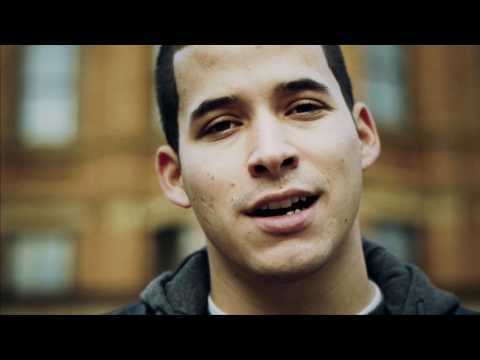
This coming Sunday, Jan. 12, will be the two year anniversary of the post that has inexplicably (to me) probably been the most-read thing I’ve ever written. It’s always somewhat odd to me to note the things that get the most hits. They’re almost invariably stuff that’s more off-the-cuff than much-deliberated (like this silly post of coffee and theology jokes). (Kind of depressing, really.)
One thing I’ve noted from the comments on the post is that, at the time, many people chided my criticisms since I was picking on some “kid” who was just expressing himself, while I insisted that he was acting as a professional and making a contribution to public discourse that was therefore subject to critique.
Since then, that “kid” has of course made quite the career from the video in question and now has a book entitled JESUS > RELIGION. It’s still selling quite well on Amazon, with 308 reviews and counting, and is a NYT bestseller. His Facebook page currently has over 231,000 “likes.”
Now, one might argue that it was this video that propelled him from “amateur” to “professional” status, and it certainly did make him a celebrity. But as I mentioned at the time, the video was quite professionally produced, and he had already been soliciting speaking engagements for some time before the video came out. So he was clearly a professional, just not quite yet a very successful one.
But now he has joined the pantheon of Evangelical pop spirituality stars. I wish him well. I do not think that that kind of spirituality will long endure, however, as Evangelicalism now seems to be engaged in a fairly serious self-critique which is coming to look at the sort of religion this gentleman pushes as rather shallow and even heretical.
I actually ended up doing a couple of follow-up posts to explore some further issues related to the original. Here are all the posts in the series:
- Why I Love (True) Religion Because I Love Jesus
- Why I Love (True) Religion, Epilogue
- Religion, Rules and Reality
A lot of this kind of thing I would probably today post on Orthodoxy and Heterodoxy, but the site didn’t exist yet in January 2012. The popularity of the original post and its follow-ups are actually part of what led me to start the O&H site in the summer of 2012.
Thanks to all my readers. I appreciate whatever attention you can lend.
Share this:
Fall Speaking Engagements: New Jersey, Georgia, SE Pennsylvania
I’ve got several upcoming speaking engagements this Fall. If you’re in the area, I’d love to see you:
- October 19: Sharing Orthodoxy in the New World: Conversations on Faith with Family and Friends (a conference on Orthodox evangelism) at Assumption Orthodox Church in Clifton, New Jersey.
- October 26: The Church in the Bible & The Church After the Bible (two separate talks) (event page on Facebook) at St. Innocent Orthodox Church in Macon, Georgia.
- November 15: The Church in the Bible (for “Third in the ‘Burg”) at Agia Sophia Coffeehouse in Harrisburg, Pennsylvania.
- November 30: Holy Conversations: The Church’s Response to Contemporary Issues (event page on Facebook) at St. John’s Indian Orthodox Church in Drexel, Pennsylvania.
- December 15: Orthodox Christianity and Social Media (annual St. Herman Lecture) at St. Stephen Orthodox Cathedral in Philadelphia, Pennsylvania.
I would love meeting many of you!
Share this:
“Churching the Nation: Sharing the Orthodox Faith in America” near Atlanta on May 26
If you live in the Atlanta area, you’re invited to this event on Sunday, May 26, hosted by Ss. Raphael, Nicholas and Irene Greek Orthodox Church, in Cumming, Georgia. I hope to meet many of you there!
For those of you on Facebook, there is an event page there for you to join.
Share this:
No True Church? No True Church History.
One of the criticisms of Orthodoxy’s understanding of its own history (not to mention, Roman Catholicism’s) is that there really is no unbroken Christian tradition of anything at all, that Church history is really just about multiple movements, doctrines and practices that cannot coherently be traced back to the Apostles. This is essentially one version of the historiography of the anti-ecclesiologists. If there is no true Church, then there certainly cannot be any true tradition of continuity.
The above is the first paragraph of a post I published today on the Orthodoxy and Heterodoxy weblog, entitled “No True Scotsman does Church History Polemics.” It deals with one of the approaches to Church history taken by those who not believe in one, true Church (what I call the “anti-ecclesiology”), simply denying what those who lived in the centuries prior believed about their Church, that it is the unbroken continuation of the very Church of the Apostles.
I hope you like it.
Share this:
Orthodoxy at the Emmys
Not that I watch awards shows more than perhaps once every five years or so (and I didn’t see this one, either), but I’m going to go out on a limb and say that this is the first time that Orthodox Christian monastic enclave Mount Athos was mentioned in an Emmy speech. This is Jonathan Jackson winning his fifth Emmy.
Readers may recall my interview with Mr. Jackson shortly before he and his family were baptized into the Orthodox Church earlier this year.
I know that some may greet this sort of thing with skepticism, especially since fame is not exactly conducive to salvation. The value of these kinds of moments, though, is that Orthodoxy is making its way into the public square.
Of course, this can be done badly, and fame can be a temptation in at least two ways: The first is the more obvious, and that is that fame can destroy humility. I’m not sure that many Orthodox people would therefore argue that acting, politics, sports, writing, broadcasting and almost anything which puts one’s work into the general stream of the culture should all be professions avoided by Orthodox Christians. (Some would, I’m sure.) I talked about the intersection of Hollywood acting with genuine faith and its problems for humility with Mr. Jackson in my interview with him. That, for me, was one of the more fascinating parts of the talk.
The second temptation that fame gives for the Orthodox Christian is like unto the first, but moves in a different vector, and that is to cheapen the faith by turning it into a selling point or an exotic accessory for the media personality. That can be done, and I think it’s probably happening in countries where most people are at least nominally Orthodox Christians. (Think, for instance, about the accusations Russian politicians get when they are visibly photographed in church.) But there is also a way publicly to witness to the Orthodox faith without cheapening it, even if that witness is sometimes only a hint. You may not agree, but I think the above video is a good example of this more genuine approach.
I honestly wonder (and I don’t say this in some sort of romantic way) how many folks watched Mr. Jackson’s speech and asked themselves who the monks of Mount Athos are and what it means that they pray for the salvation of the world. And perhaps a handful of them googled them, and perhaps a smaller handful started to read about their faith.
It’s possible.
Update: As I imagined could happen, this post got a spike in hits over the past few days, mainly from people searching for some combination of “Jonathan Jackson” and “Orthodox” or “religion.” It seems he got a few people wondering.
Share this:
Why can’t God love me the way I am?
One of the perhaps most pressing theological questions of our time and place is answered beautifully in this post from Jim John Marks:
The question is not “why can’t God love me the way I am”, the question is “why can’t I love God the way I am”.
And it is the pursuit of the answer to that question which opens the door to a discussion about why our behavior, and our doctrine, matters. It ends the false conversation around whether or not specific behavior or doctrine is necessary to be “good enough” and so undercuts the contemporary appeals to relativism. The conversation then becomes about what the specifics of a relationship to God look like and why.
The whole post is so good that I really wish I’d written it. So go read it.

