Antiochian Archdiocese
“We speak one language: Antiochian”: More Thoughts on the Future of the Antiochian Archdiocese and Orthodoxy in America
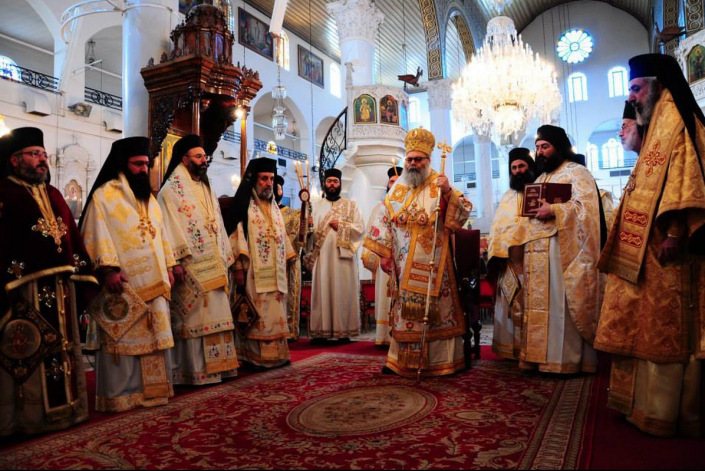
If you’ve done any reading from modern Orthodox saints, you know that there is a certain tone among the holy elders of Greece, another from Russia and so forth. Each culture enculturates the Gospel in its own authentic way and speaks of the truth of Jesus Christ with its own voice.
One of the things which makes the particular Antiochian voice distinct—although it is often not well known here in America, as I wrote in my previous post—is that it is not tied to any single ethnicity or culture. The ancient cultures and languages that have called Antiochian Orthodoxy home are diverse—Syriac, Greek, Georgian, Arabic, Cypriot, Central Asian—as are those which now are also home to the Antiochian church—English, American, Central and South American, Turkish, Australian, French, German and others. Ancient Antioch itself was a cosmopolitan city even in the time of the Apostles, and while the city of Antioch of today is now a small Turkish municipality, the spirit of Antiochian identity in its Christian form has remained cosmopolitan and multicultural. Some folks today equate Antiochian with Arabic, but that identification has never really been accurate.
Indeed, one of the greatest voices of the Antiochian church in America, St. Raphael of Brooklyn, regarded himself as being a man who identified with many peoples: “I am an Arab by birth, a Greek by primary education, an American by residence, a Russian at heart, and a Slav in soul.”
Yet while the voice of the Antiochian tradition is spoken in many languages and cultures, there is nevertheless a single “Antiochian language,” so to speak, a particular way of being and speaking in the Orthodox Church that is distinct.
I have been talking about this “Antiochian language” recently with friends who know it far better than I, and one of them mentioned to me a phrase used in the Arabic-language publishing and social media of the patriarchate, which gives this post its title: “We speak one language: Antiochian.” It has also been rendered in English as “Our Language is Antiochian. Our Language is One.” This certainly is not a reference to the Arabic language but rather to a kind of spiritual language, that particular voice which is the spirit of Antioch.
With the attention that our archdiocese here in America has received lately from the Patriarchate of Antioch, our connection to that Antiochian language has been strengthened, and I’ve noticed a particular tone—hard to describe, but definitely distinct. If I had to put adjectives to it, I might choose: accessible, direct, refreshing, bright, earthy, peaceful. It is not dark or hard, but it is also not too yielding or liberal. It is loving and un-self-conscious.
A bridge is being built between ancient Antioch and her children here in North America, and now there is traffic on that bridge, a kind of spiritual commerce and economy that has its own idiom. For many, this may be the first time that someone has “spoken Antiochian” to them. It is not that this has been absent from our archdiocese, but we have simply not had access to it in the way that we have over the past several weeks.
As I said, though, that voice is hard to define with adjectives, so I would like to give a few samples, both ancient and modern, which to me all sing in the same spiritual key, which speak with the same spiritual voice. The subjects are different, but the tone (to me) is the same:
Blessed is the person who has consented to become the close friend of faith and of prayer: he lives in singlemindedness and makes prayer and faith stop by with him. Prayer that rises up in someone’s heart serves to open up for us the door of heaven: that person stands in converse with the Divinity and gives pleasure to the Son of God. Prayer makes peace with the Lord’s anger and with the vehemence of His wrath. In this way too, tears that well up in the eyes can open the door of compassion.
- St. Ephrem the Syrian, “Armenian Hymn No. 1,” 4th c.
St. Ephrem is of course familiar to many Orthodox Christians, and he is not often thought of as “Antiochian” exactly, but this tone is still there. (And one recognizes the Semitic image of God’s “wrath” there, of course.) I especially love the phrase “close friend of faith and of prayer.”
Fast forward several centuries, and that same feeling is still there. Here’s Sulayman al-Ghazzi (Solomon of Gaza), an Arabic-speaking Palestinian bishop from the 11th century:
Not all baptized with water are Christians
Without the baptism of the life of the world to come;
In Christ the peoples of the earth have been baptized
Though some of them afterward showed hypocrisy.
They became like a body’s parts in its natural state—
Some helpful, some unreliable.
How many patriarchs are unpraiseworthy in their service,
Miserable bishops and metropolitans,
Who are among the heretics, in place of truth,
Preferring falsehood and slander!
Over them, God has favored a Church
Whose stones are gathered from all corners and climbs.
Truth has built her edifice
Rising to heaven on pillars and columns,
Fashioned from chrysolite,
Precious stones, sapphires, and pearls.
Her foundation is the rock of faith,
Rooted deep with pillars and walls.
All bodily creatures are pleased to see it
When it appears in races and colors,
Byzantines, Russians, and Franks
Joined with Indians, Khuzestanis, Abkhaz, and Alans
Armenians and Pechenegs in agreement
With the people of the Jazira, namely Harran.
And Copts too, in the Lower Egypt father together
From Upper Egypt to Qus and Aswan.
People of Shiraz and Ahwaz in harmony
With Iraq, unto furthest Khorasan.
From the place of the sunrise to the place of its setting,
To the Euphrates, to Sihon and Gihon.
White, blond, and brown in their churches
Praise God with the yellow and the black.
All of them have come to the religion of Christ
And are guided, gaining profit from loss.
Seventy nations, each with a language
Branching off from one Syriac tongue.[*]
Hebrew was the speech of God’s apostles
Before they set out with the mission of the Gospel.
Each apostle gained a language,
Beautiful, reliable, and clear.
Not out of weakness but having heard proof,
Those to whom they preached responded with faith.
So they spread out among their nations,
None fearing the devil’s wiles.
When their service to God was done, they slept,
Having roused many sleepers.- Suleyman al-Ghazzi, from “Not All Baptized with Water Are Christians” (trans. Samuel Noble), in The Orthodox Church in the Arab World 700-1700: An Anthology of Sources, pp. 163-164
[*] Medieval Arabs, both Muslim and Christian, generally held that Syriac was the language spoken by Adam and Eve.
And roughly 1,000 years later, we still hear this same direct, refreshing voice from the leaders of the Orthodox Youth Movement:
The Church is the salt of the earth and completes the work of Christ in the world. The Church works, she is present, for the sake of the salvation of the world. We can say that she is the center of being, in her its destiny is achieved. The world corrupts and ages, but the Church is continuously renewed for the sake of the salvation of the world. But if the salt is corrupted, then how can it be salty?
The Church is the group of those who believe in the Lord Jesus and who have united around him to live the life of the Gospel, the life of God. They have no concern except to follow the Lord’s teaching and to follow in his footsteps. The group is in the world and for the world, but at the same time it is not of the world. From the beginning, from the ascension of the Lord to heaven, it is oriented toward the age to come, awaiting the return of the heavenly bridegroom and hastening him on. From now on, it lives in the last days, in the fullness of time, “it uses this world as though it doesn’t use it, and buys as though it doesn’t own.”
- Fr. Elias Morcos, “On Revival in Antioch,” 1964
We become children of the Resurrection when we become bridges of communication and encounter between those who are separated, and between those who are in conflict. Let us be bridges exactly like the Lord who did not ask anything for Himself, but gave the world everything, to such an extent that He offered Himself for the salvation of the world. Let us serve as ways of rapprochement for all. Through love, sacrifice and in deeds and truth we shall build our countries.
We become children of Resurrection when we live our faith in genuineness, depth and meaningfulness. External expressions are bound to change with cultures and ways of living, but the genuine Christian content preserves the trust which has been handed down to the saints under many different circumstances, cases and cultures. Let us imitate the courage of Christ who did not fear anything, even death. Instead He faced the cross with love and brought us to resurrection. Let us face the cross of this crucified East with overwhelming love for all those who are crucified on it, until we reach with them the resurrection we all expect. Let us live these painful days in simplicity, enjoying the bare necessities of life and experiencing the true wealth which is life with God….
Last but not least, we do not forget that God is the Lord of history, so we may always hold to patience and hope which do not fade away. Let us remember the words of the prophets and how much they called, in times of distress, for repentance and faith, until God intervenes and removes the distress. In these troubled days we are witnessing, we are in sore need of faithful witnesses. Let us move out of our distress with more faith, more purity and greater loyalty. When we understand that we only need God and no one else, the effects of resurrection will appear in us and in all our humanity. When this happens all around us shall be transfigured.
- Patriarch John X (Yazigi) of Antioch, Pascha 2013 Pastoral Letter
How should I conduct myself at Pascha? I try to become the Gospel, to become the word so that people may read me and live. Christianity is faces that are illumined in order to give light. This is the living Pascha. It is what causes me to pass through people to the Father’s face. How should I live? “I do not live, it is Christ who lives in me.” Christianity is not a religious system. It is love- that is, clinging to Christ such that you forget your own face in order to see His face and the whole world in His face. If we are people of Pascha, then we are in a state of constantly going beyond ourselves and the world in order to become Him and for Him to become us. It is not a matter of systems and it is not a matter of theoretical principles. Everything is His face, until all faces pass away or we read Him traced upon them.
- Metropolitan Georges (Khodr) of Mount Lebanon, “Who Shall I Be at Pascha?“, 2014
And now this “Antiochian language” is also being spoken to us here directly in America by the representative of our patriarch:
Christ defeated death in our lives! He set us free from fear: from fearing death, from fearing evil, from fearing illness and calamities, from fearing each other, from fearing the uncertainty of the future, from fearing insecurity and unemployment, from fearing violence and terrorism, and from fearing persecution and sufferings for His sake. Instead, He gave us the power and the means to seek the true freedom. The freedom to love each other even though we differ in character, education and profession. The freedom to forgive each other even though we have suffered. The freedom to ask forgiveness from each other even though we have badly hurt each other. The freedom to serve each other even though we differ in origin, background and culture. The freedom to work together even though we differ in thinking, worldview, ability and capacity. The freedom to abide by the truth and raise our children to seek Him. The freedom to defend the unjust and the needy and restore them their rights. The freedom to be at the Lord’s hand, obedient, prayerful and faithful.
Christ defeated death in our reality! He gave us the gift to start anew, to renew our heart, to purify our mind, and to reaffirm our commitment of faith at His service. He restored in us the dignity of our person, the beauty of our nature, and the bounty in our personality.
Christ defeated death in our relationships! Christ is the only mediator between God and man. However, He made us “bridges” of salvation to reach others. As Antiochian Orthodox Christians in North America, we are bequeathed an apostolic “lineage:” tradition, inheritance and mission. In this regard, the image of the “bridge” summarizes the Antiochian witness that emerges out of the past, prompts the present and prepares the future of the Antiochian Orthodox Church on the eve of the election of a new Metropolitan to succeed to His Eminence, Metropolitan Philip of eternal memory.
- Metropolitan Silouan (Moussi) of Argentina, “How to Resurrect with Christ: Pascha 2014 Pastoral Letter“
I could give many, many more examples, and of course you can find a good bit of this sort of thing on the Notes on Arab Orthodoxy weblog. But I hope that these passages will suffice to give you some sense of the tone of “speaking Antiochian.” It is different from other languages, and while many of its speakers are these days from the Middle East, it is not the same thing as speaking Arabic, and there is no reason why non-Arabic speakers or people from outside the Middle East cannot speak it. It is a beautiful language, and it speaks to us of our Savior Jesus Christ with a peculiar accent and vocabulary of its own, itself building a bridge between persons, between peoples, and between mankind and God.
As I wrote last week, my hope for us Antiochians here in America is that we may hear more and more “speaking Antiochian” to us, so that we may better learn this beautiful language. And in so doing, not only will our own faith be strengthened, but we will also have something beautiful to offer to our Orthodox brothers and sisters throughout America.
Share this:

Light from Antioch: The Future of the Antiochian Archdiocese and Orthodoxy in America
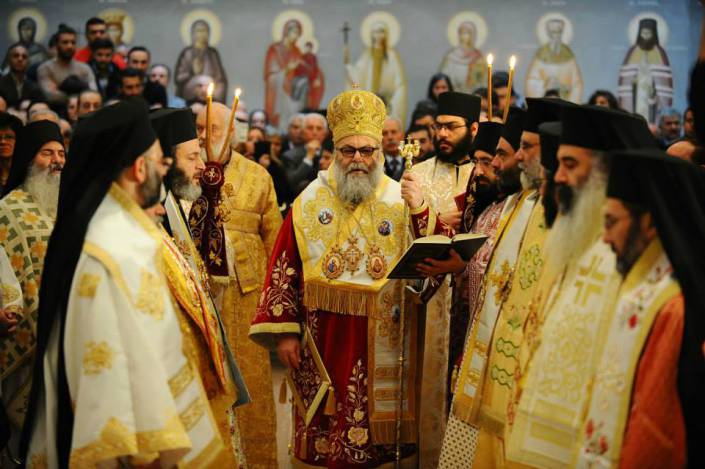
Notes: The following is a personal reflection and represents only my own views. This piece is also available as an audio recording via Ancient Faith Radio.
This past Friday, I had the blessing along with other clergy of the Diocese of Charleston and Oakland and also the Diocese of Washington and New York to meet with His Eminence, Metropolitan Silouan (Moussi) of Argentina in Washington, DC. Sayidna Silouan’s purpose in calling this meeting, as well as many other similar meetings throughout North America, was to hear the voices of the clergy and faithful of the Antiochian Archdiocese of North America, to hear what they yearned for in their future, in the light of the transition that is now upon us, namely, that within a couple of months we will be in the care of a new Metropolitan. +Silouan’s role here in North America is Patriarchal Vicar, and he is essentially in charge of the archdiocese until a new Metropolitan is elected. He serves as the voice of the Patriarch of Antioch in our midst.
The table where we met seemed to be mostly filled with listeners (which is a good thing in the clergy), but a few of us spoke when Metropolitan Silouan asked us directly to tell him what our hopes were. In his initial remarks on this, he said something that stuck with me: “Thinking according to the constitution is good, but thinking as the Church is better.” I’ll say more on that in a moment.
The other clergy who spoke mainly talked of their desire for the unity of the archdiocese to be kept intact, that we should not be divided. And +Silouan mentioned that he had been seeing peace everywhere in the archdiocese, wherever he went, that no one had to tell us to be unified and at peace, but that we simply were. And I have noted that this theme seems to be repeated in a number of the conversations between Antiochians I have been privy to. I have also noticed in my more than 16 years of experience in the archdiocese that there really is a common identity, a brotherhood among us. It would be a shame for that to be harmed in any way.
Some seem to believe that that unity would be harmed if, for instance, the archdiocese were divided into multiple metropolitan districts, “every bishop doing his own thing” in the words of one comment I read online. And that is typically contrasted with the system we have recently had, namely, a single ruling metropolitan with auxiliary bishops who served entirely at his blessing.
We also had a different system in place for a few years after the grant of self-rule, which was another iteration of the vision of Metropolitan Philip for our archdiocesan unity—diocesan bishops with more of their own authority in their dioceses, yet with a strong metropolitan at the head of the archdiocese. This was actually a traditional metropolitical system, in which the bishops on a synod do everything “with him who is first,” while the one who is first also does what he does with the consent of all. And it’s clear to me from my reading of Church history that there are many possible models that we could adopt which need not be read as “dividing the archdiocese.”
The exact details of how bishops who sit together on a synod presided over by their metropolitan can all work together and remain united and still have authority emphasized on the primate can have lots of different sets of details to define them. (Examples: Are finances shared? Is authorization of ordinations centralized? Can each diocese have its own educational institutions? Can bishops found churches and monasteries on their own?) I don’t see why any conversation about these things has to devolve into only two iterations—1) a sovereign metropolitan with auxiliaries or 2) fully independent dioceses each headed by a bishop who owes no particular allegiance to the metropolitan. These things sit along a continuum with numerous points in between, and they can all contribute to the question of unity.
This kind of thing seems to be on many people’s minds. But I have to admit that what comes to my mind when I think about the unity of the Antiochian Archdiocese and what came to my mind especially when Metropolitan Silouan asked us what we wanted for our future didn’t really have much to do with all these administrative details that are, to be honest, above my pay grade and not in my purview. I’m just a parish priest.
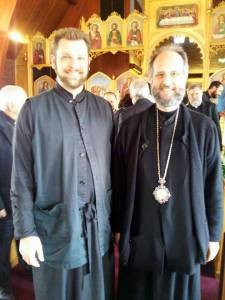 But +Silouan’s words stuck in my mind:
“Thinking according to the constitution is good, but thinking as the Church is better.”
I do not mean this as any slight to my brothers and sisters, but it seems to me that, while discussion about administrative details and rules (“thinking according to the constitution”) is important, there is something of greater importance that I hope will become more part of our conversations, especially as we head toward our special nominating convention on June 5. And what is that? It is our spiritual inheritance as Antiochian Orthodox Christians.
We rightly often speak of Ss. Peter and Paul and Ignatius of Antioch, and I love those parts of our tradition. But there is actually a great wealth of spiritual riches that have been developing in the Antiochian Church recently, as well, and it is almost entirely unknown to Antiochians in America.
To give but one example of this, one of the major developments of the 20th century in the patriarchate was the founding of the Orthodox Youth Movement. This movement was founded in the 1940s and was the instrument of an astonishing spiritual renewal over the decades that followed. It not only produced abbots, bishops and even patriarchs (Patriarch Ignatius IV was one of the founders of the movement), but it began church schools, founded and revitalized monasteries, emphasized personal holiness and asceticism, and rapidly expanded theological education throughout the patriarchate. It was a powerful and thoroughgoing reform movement that radically reshaped a church that, sad to say, had been moribund with nominalism for quite some time.
The results of the Orthodox Youth Movement, which celebrated its 70th anniversary in 2012, are a vital and spiritually rich Antiochian church in the Middle East, a church which even now is showing its spiritual strength as it endures crucifixion anew. Thanks in large part to the movement, there are now monasteries where there were none. There are charitable programs where there were none. There is theological education. There are holy elders. There are not just old monasteries that were previously on the brink of abandonment and are now filled with monastics, but there are even new monasteries.
And most Antiochians on this continent have no idea about any of this. Much of it, I only learned about recently myself.
So what did I say to Metropolitan Silouan when he asked us what our hopes were?
My hope for the future of the Antiochian Archdiocese of North America is that we can receive some of these great spiritual riches.
 Why is it that an Orthodox Christian in America can easily access the 20th century holiness of Elder Paisios, Elder Sophrony, St. Silouan, St. Porphyrios, St. John of Kronstadt, Elder Cleopa, etc., and not feel that they are becoming Hellenized, Russified, Romanianized, etc.? These holy people are naturally attractive to us, because they are saints, and their holiness transcends cultural barriers. But why are we almost entirely ignorant of the immense spiritual power of Orthodox Christianity in the Middle East?
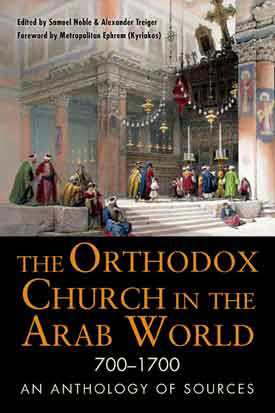
There are probably a lot of answers to that question. One of them is that not much is getting translated from Arabic to English. We are blessed to have the Notes on Arab Orthodoxy weblog to help us connect to that great spiritual wealth, and its author has recently contributed to a new volume to help us connect with some of that historical inheritance, too: The Orthodox Church in the Arab World 700-1700: An Anthology of Sources (a wonderful book I recently got a copy of, by the way). But there needs to be more of that kind of thing—a lot more.
There is a beautiful, vast treasure trove of Antiochian spirituality that most Orthodox Christians in America—even Antiochians—are mostly unaware of.
One of the things that has struck me profoundly during the past several weeks since our father Metropolitan Philip reposed in the Lord is how immediately and how refreshingly our patriarchate has become involved with us. I am not part of the “administration,” but I have not felt for one moment that we were “under” some “foreign bishops” during this process (something one often hears within Orthodoxy in America). Rather, my feeling has been that we are being attended to as family by family, that we are being loved by spiritual fathers who really care what happens to us.
All this brings us to the question of what this attention from the patriarchate might mean. It certainly has not seemed to me to be overbearing in any way. Some have suggested that it means that the patriarchate wants to draw us closer to itself so that there may be more solidarity between us. Some fear that this may mean “Arabization” (for whatever that might mean). Some fear that this may put administrative unity in Orthodoxy in America in some jeopardy, i.e., if the American Antiochians become more Antiochian, they will be less American.
I cannot answer all of those fears, because I do not know what the future holds. But I will give one example to address one of them. For some folks, “Arabization” might mean a new emphasis on the Arabic language in worship. That would of course be a tall order, since roughly 3/4 of our clergy are converts and most converts have no knowledge of Arabic. But I do not think it would be ordered at all, to be honest. We have a patriarchate that has parishes in Turkey, just over the border from Syria, that worship in Turkish—not Arabic. We also have a patriarch who, when he was assisting with parishes in Europe, insisted on taking an intensive English language course so that he could both liturgize and preach in English before he visited any parishes in the United Kingdom.
What I would like to see is a new infusion of the spirit of Antioch, a new and increasing access to these spiritual riches—Middle Eastern saints and elders, monasticism, vigorous and traditional Byzantine music education, mutual visits, etc. In short, we are a family that needs to become closer.
None of this is meant to be a criticism of Metropolitan Philip, by the way. He was the man for his time—a great man—and he accomplished many remarkable things. And I felt a personal loss at his death. At the same time, I am also reminded of words spoken by Archbishop Joseph at Sayidna Philip’s burial, when he was speaking of what the new Metropolitan would need to do:
“David fought the wars, but Solomon built the Temple.”
I don’t pretend to know exactly what he intended that to mean, but one interpretation that occurs to me is that +Philip fought many wars and was a victorious warrior. And the next Metropolitan now has an opportunity to take us to another level, a place where the spiritual depth of Antioch is brought to us in even greater power.
So what does all this mean for our fellow Orthodox Christians here in America who may wonder if the Antiochians might become too preoccupied with being Antiochian to be as concerned with administrative unity?
Just as all the other Orthodox traditions in America each have their own contribution to make to the Orthodox Church here, the Antiochians do, as well. And we should bring our very best to the table. Frankly, there is a lot in our own tradition that we haven’t accessed yet. And I want it for myself and for my own children. And it’s not out of any ethnic sentiment on my part that I want it—I’m Lithuanian (though I barely know what that means). I want this stuff because it’s a whole world of holiness to explore.
So that brings me to my final point, which I believe answers both the question of unity in the Antiochian Archdiocese and also unity within Orthodoxy in America:
The more authentically Orthodox Christian we become, the more united we will be.
The root of all division is sin. And the basis for all true brotherhood in Christ is holiness. It’s really pretty simple. So if each of us adheres more closely to what is best within each of our traditions (without ignoring other traditions, of course), then we will become one. Administrative issues are really secondary to the question of spiritual renewal, and if there is authentic spiritual renewal, the administrative issues will work themselves out a lot more easily.
So my hope is this: If anyone in the Holy Synod may happen to read this, and if any Antiochian or any Orthodox Christian happens to read this, that all our prayers will be joined together in the Holy Spirit so that the outcome of the next couple months’ deliberations pertaining to the Antiochian Archdiocese of North America is this:
Whatever might happen with the election of a Metropolitan or even questions of how we are to be administered, may it open up new channels for the abundant streams of grace from the Antiochian tradition to flow to us here in North America.
May God’s will be done.
