Light from Antioch: The Future of the Antiochian Archdiocese and Orthodoxy in America
Notes: The following is a personal reflection and represents only my own views. This piece is also available as an audio recording via Ancient Faith Radio.
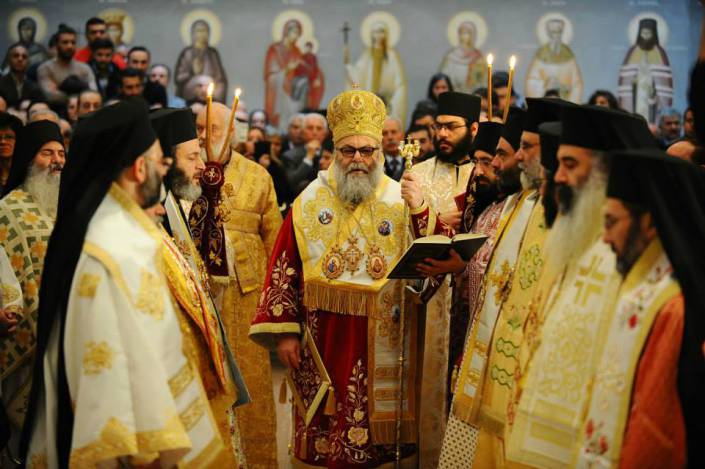
This past Friday, I had the blessing along with other clergy of the Diocese of Charleston and Oakland and also the Diocese of Washington and New York to meet with His Eminence, Metropolitan Silouan (Moussi) of Argentina in Washington, DC. Sayidna Silouan’s purpose in calling this meeting, as well as many other similar meetings throughout North America, was to hear the voices of the clergy and faithful of the Antiochian Archdiocese of North America, to hear what they yearned for in their future, in the light of the transition that is now upon us, namely, that within a couple of months we will be in the care of a new Metropolitan. +Silouan’s role here in North America is Patriarchal Vicar, and he is essentially in charge of the archdiocese until a new Metropolitan is elected. He serves as the voice of the Patriarch of Antioch in our midst.
The table where we met seemed to be mostly filled with listeners (which is a good thing in the clergy), but a few of us spoke when Metropolitan Silouan asked us directly to tell him what our hopes were. In his initial remarks on this, he said something that stuck with me: “Thinking according to the constitution is good, but thinking as the Church is better.” I’ll say more on that in a moment.
The other clergy who spoke mainly talked of their desire for the unity of the archdiocese to be kept intact, that we should not be divided. And +Silouan mentioned that he had been seeing peace everywhere in the archdiocese, wherever he went, that no one had to tell us to be unified and at peace, but that we simply were. And I have noted that this theme seems to be repeated in a number of the conversations between Antiochians I have been privy to. I have also noticed in my more than 16 years of experience in the archdiocese that there really is a common identity, a brotherhood among us. It would be a shame for that to be harmed in any way.
Some seem to believe that that unity would be harmed if, for instance, the archdiocese were divided into multiple metropolitan districts, “every bishop doing his own thing” in the words of one comment I read online. And that is typically contrasted with the system we have recently had, namely, a single ruling metropolitan with auxiliary bishops who served entirely at his blessing.
We also had a different system in place for a few years after the grant of self-rule, which was another iteration of the vision of Metropolitan Philip for our archdiocesan unity—diocesan bishops with more of their own authority in their dioceses, yet with a strong metropolitan at the head of the archdiocese. This was actually a traditional metropolitical system, in which the bishops on a synod do everything “with him who is first,” while the one who is first also does what he does with the consent of all. And it’s clear to me from my reading of Church history that there are many possible models that we could adopt which need not be read as “dividing the archdiocese.”
The exact details of how bishops who sit together on a synod presided over by their metropolitan can all work together and remain united and still have authority emphasized on the primate can have lots of different sets of details to define them. (Examples: Are finances shared? Is authorization of ordinations centralized? Can each diocese have its own educational institutions? Can bishops found churches and monasteries on their own?) I don’t see why any conversation about these things has to devolve into only two iterations—1) a sovereign metropolitan with auxiliaries or 2) fully independent dioceses each headed by a bishop who owes no particular allegiance to the metropolitan. These things sit along a continuum with numerous points in between, and they can all contribute to the question of unity.
This kind of thing seems to be on many people’s minds. But I have to admit that what comes to my mind when I think about the unity of the Antiochian Archdiocese and what came to my mind especially when Metropolitan Silouan asked us what we wanted for our future didn’t really have much to do with all these administrative details that are, to be honest, above my pay grade and not in my purview. I’m just a parish priest.
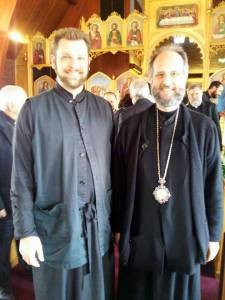 But +Silouan’s words stuck in my mind:
“Thinking according to the constitution is good, but thinking as the Church is better.”
I do not mean this as any slight to my brothers and sisters, but it seems to me that, while discussion about administrative details and rules (“thinking according to the constitution”) is important, there is something of greater importance that I hope will become more part of our conversations, especially as we head toward our special nominating convention on June 5. And what is that? It is our spiritual inheritance as Antiochian Orthodox Christians.
We rightly often speak of Ss. Peter and Paul and Ignatius of Antioch, and I love those parts of our tradition. But there is actually a great wealth of spiritual riches that have been developing in the Antiochian Church recently, as well, and it is almost entirely unknown to Antiochians in America.
To give but one example of this, one of the major developments of the 20th century in the patriarchate was the founding of the Orthodox Youth Movement. This movement was founded in the 1940s and was the instrument of an astonishing spiritual renewal over the decades that followed. It not only produced abbots, bishops and even patriarchs (Patriarch Ignatius IV was one of the founders of the movement), but it began church schools, founded and revitalized monasteries, emphasized personal holiness and asceticism, and rapidly expanded theological education throughout the patriarchate. It was a powerful and thoroughgoing reform movement that radically reshaped a church that, sad to say, had been moribund with nominalism for quite some time.
The results of the Orthodox Youth Movement, which celebrated its 70th anniversary in 2012, are a vital and spiritually rich Antiochian church in the Middle East, a church which even now is showing its spiritual strength as it endures crucifixion anew. Thanks in large part to the movement, there are now monasteries where there were none. There are charitable programs where there were none. There is theological education. There are holy elders. There are not just old monasteries that were previously on the brink of abandonment and are now filled with monastics, but there are even new monasteries.
And most Antiochians on this continent have no idea about any of this. Much of it, I only learned about recently myself.
So what did I say to Metropolitan Silouan when he asked us what our hopes were?
My hope for the future of the Antiochian Archdiocese of North America is that we can receive some of these great spiritual riches.
 Why is it that an Orthodox Christian in America can easily access the 20th century holiness of Elder Paisios, Elder Sophrony, St. Silouan, St. Porphyrios, St. John of Kronstadt, Elder Cleopa, etc., and not feel that they are becoming Hellenized, Russified, Romanianized, etc.? These holy people are naturally attractive to us, because they are saints, and their holiness transcends cultural barriers. But why are we almost entirely ignorant of the immense spiritual power of Orthodox Christianity in the Middle East?
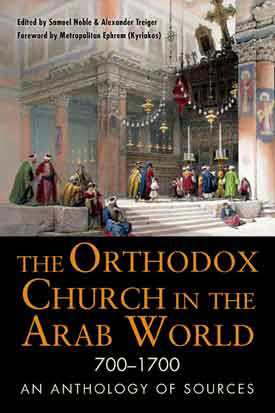
There are probably a lot of answers to that question. One of them is that not much is getting translated from Arabic to English. We are blessed to have the Notes on Arab Orthodoxy weblog to help us connect to that great spiritual wealth, and its author has recently contributed to a new volume to help us connect with some of that historical inheritance, too: The Orthodox Church in the Arab World 700-1700: An Anthology of Sources (a wonderful book I recently got a copy of, by the way). But there needs to be more of that kind of thing—a lot more.
There is a beautiful, vast treasure trove of Antiochian spirituality that most Orthodox Christians in America—even Antiochians—are mostly unaware of.
One of the things that has struck me profoundly during the past several weeks since our father Metropolitan Philip reposed in the Lord is how immediately and how refreshingly our patriarchate has become involved with us. I am not part of the “administration,” but I have not felt for one moment that we were “under” some “foreign bishops” during this process (something one often hears within Orthodoxy in America). Rather, my feeling has been that we are being attended to as family by family, that we are being loved by spiritual fathers who really care what happens to us.
All this brings us to the question of what this attention from the patriarchate might mean. It certainly has not seemed to me to be overbearing in any way. Some have suggested that it means that the patriarchate wants to draw us closer to itself so that there may be more solidarity between us. Some fear that this may mean “Arabization” (for whatever that might mean). Some fear that this may put administrative unity in Orthodoxy in America in some jeopardy, i.e., if the American Antiochians become more Antiochian, they will be less American.
I cannot answer all of those fears, because I do not know what the future holds. But I will give one example to address one of them. For some folks, “Arabization” might mean a new emphasis on the Arabic language in worship. That would of course be a tall order, since roughly 3/4 of our clergy are converts and most converts have no knowledge of Arabic. But I do not think it would be ordered at all, to be honest. We have a patriarchate that has parishes in Turkey, just over the border from Syria, that worship in Turkish—not Arabic. We also have a patriarch who, when he was assisting with parishes in Europe, insisted on taking an intensive English language course so that he could both liturgize and preach in English before he visited any parishes in the United Kingdom.
What I would like to see is a new infusion of the spirit of Antioch, a new and increasing access to these spiritual riches—Middle Eastern saints and elders, monasticism, vigorous and traditional Byzantine music education, mutual visits, etc. In short, we are a family that needs to become closer.
None of this is meant to be a criticism of Metropolitan Philip, by the way. He was the man for his time—a great man—and he accomplished many remarkable things. And I felt a personal loss at his death. At the same time, I am also reminded of words spoken by Archbishop Joseph at Sayidna Philip’s burial, when he was speaking of what the new Metropolitan would need to do:
“David fought the wars, but Solomon built the Temple.”
I don’t pretend to know exactly what he intended that to mean, but one interpretation that occurs to me is that +Philip fought many wars and was a victorious warrior. And the next Metropolitan now has an opportunity to take us to another level, a place where the spiritual depth of Antioch is brought to us in even greater power.
So what does all this mean for our fellow Orthodox Christians here in America who may wonder if the Antiochians might become too preoccupied with being Antiochian to be as concerned with administrative unity?
Just as all the other Orthodox traditions in America each have their own contribution to make to the Orthodox Church here, the Antiochians do, as well. And we should bring our very best to the table. Frankly, there is a lot in our own tradition that we haven’t accessed yet. And I want it for myself and for my own children. And it’s not out of any ethnic sentiment on my part that I want it—I’m Lithuanian (though I barely know what that means). I want this stuff because it’s a whole world of holiness to explore.
So that brings me to my final point, which I believe answers both the question of unity in the Antiochian Archdiocese and also unity within Orthodoxy in America:
The more authentically Orthodox Christian we become, the more united we will be.
The root of all division is sin. And the basis for all true brotherhood in Christ is holiness. It’s really pretty simple. So if each of us adheres more closely to what is best within each of our traditions (without ignoring other traditions, of course), then we will become one. Administrative issues are really secondary to the question of spiritual renewal, and if there is authentic spiritual renewal, the administrative issues will work themselves out a lot more easily.
So my hope is this: If anyone in the Holy Synod may happen to read this, and if any Antiochian or any Orthodox Christian happens to read this, that all our prayers will be joined together in the Holy Spirit so that the outcome of the next couple months’ deliberations pertaining to the Antiochian Archdiocese of North America is this:
Whatever might happen with the election of a Metropolitan or even questions of how we are to be administered, may it open up new channels for the abundant streams of grace from the Antiochian tradition to flow to us here in North America.
May God’s will be done.
Share this:

Raising Authentically Christian Children: Good News and Bad News
My friend Seraphim Danckaert published an article today on the O&H site that I think every Christian (Orthodox or not) should read: Losing our Religion: On “Retaining” Young People in the Orthodox Church. Why? Almost every kind of church throughout America is losing kids. So read it first before reading the rest of this.
Okay, done?
First, some bad news: If you’re counting on your church having awesome programs for your kids to make them be and keep them being good Christians, you’re going to be let down. There is only so much they can do, and expecting that they will do all the heavy lifting in your child’s spiritual life is extremely unrealistic. On a personal note, I’ve spoken with many 20- and 30-somethings who were very active in youth groups, Bible studies, outreach projects, etc., who all checked out of church after they left home. Their problem wasn’t that they weren’t active in public religiosity. It goes deeper, to the day to day stuff. Follow the path home. That’s where they learned to be adults. If the faith isn’t visible at home, which should be regarded as a “little church,” then it’s not going to be visible when your children start their own homes. You cannot outsource the spiritual side of parenting. And simply taking them to Sunday School (even consistently, which itself doesn’t seem to happen often any more) isn’t enough, either.
Okay, some good news: This piece is good news for all those parents who are striving to make their faith real in the home. Mothers especially are the heroes here, but fathers are critical, as well. Pray together with your kids, and not just over meals. Pray before they go to bed and at other times. Read the Bible to them. Read saints’ lives to them. Talk with them about what you read. Let your kids hear you talk about your faith, your hopes, your trust in God, your wish that you could spend more time in church, more time in prayer. Let them see you reading the Bible and other spiritual books. When you’re alone in your study and praying and your toddler sneaks in to play with forbidden things, pick him up and keep praying. All that agonizing you’re going through to make faith alive in your home is not in vain.
Another obvious conclusion is that you shouldn’t choose godparents for your kids based purely on familial or friend relationships. Your child needs to have an adult spiritual mentor who will model adult faith. Your pastor probably cannot be that person, not just because he cannot be an at-home part of your child’s life with great frequency but also because his status as a clergyman puts him outside the “role model” world for most kids. Most kids don’t imagine themselves as clergy, but they are more likely to imagine themselves to be like an aunt or uncle or close family friend. Imagination is critical in terms of spiritual possibility. If a child knows what it looks like to be a serious Christian adult, he’s more likely to be able to do it.
Regarding Seraphim’s third point, that a child needs not only authentic home spiritual life and a non-parent spiritual mentor, but that he also needs to have a spiritual experience of some kind before he hits his late teens, well, that can be a bit harder. You can’t make a kid experience the grace of God. But one thing we can count on is that there will be crises. And the direction we go when we experience a crisis will very much determine whether we experience grace. Do we model for our kids that we take such things to our pastors and into the sacrament of confession, that our first remedy is prayer and fasting? Or do we look for other solutions? (This is not to say that sometimes medical help may not be validly required, but it shouldn’t be sought out to the exclusion of spiritual guidance.) Someone who is raised going to confession regularly (not just once a year!) will likely think of his confessor as a go-to resource for dealing with a crisis. And while there’s no guarantee, he’s more likely to experience God’s grace there than if he turns to some other remedy.
I write all this in the context of working on the youth ministry in my own parish. It seems to me that it should probably mostly be geared to teaching how to make all these things a part of daily life, not just making time to get together and be spiritual and/or religious for a while and then go home. I also write this in the context of learning how to be a better father to three little Christians. I’m no expert. But I’m working on it. And I’m glad my wife is working hard on raising our children as Christians, too.
Share this:
Ten (Possibly) Surprising Facts about Fred Phelps
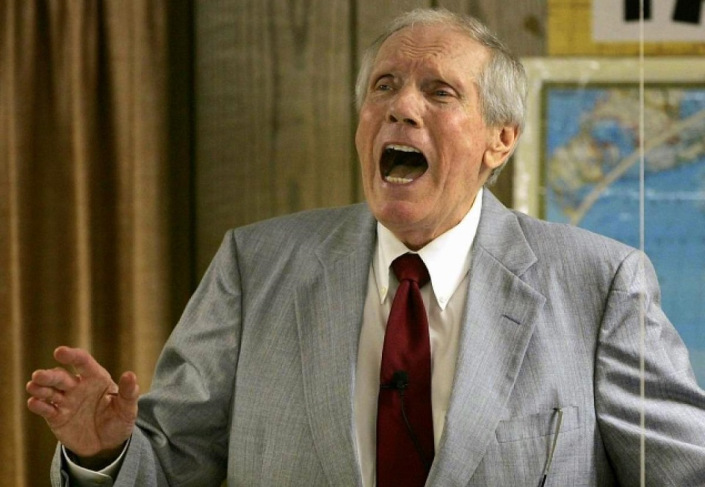
Besides being a heretical hate-monger who pushed the envelope of the definition of constitutionally protected speech, Fred Phelps, the late leader of the Westboro Baptist Church, had a number of perhaps surprising facets to his life. Here are ten of them, all culled from the Wikipedia article dedicated to him.
1. In the ’60s and ’70s, Phelps was a notable civil rights lawyer in Kansas, defending African-Americans against the “Jim Crow establishment” in the police and school system, as well as in public utilities and universities. He once said of his efforts, “I systematically brought down the Jim Crow laws of this town.”
2. In the 1980s, he won awards for his civil rights defense work from the Greater Kansas City Chapter of Blacks in Government and the Bonner Springs branch of the NAACP.
3. He once sued Ronald Reagan for appointing an ambassador to the Vatican, arguing that such an appointment violated the separation of church and state.
4. He was a Democrat, running for office in four different primaries (all lost), garnering as much as 30% of the vote in the Democratic primary for senator from Kansas.
5. He strongly believed in Five Point Calvinism, calling the Arminian doctrine opposed to it within Protestantism “worse blasphemy and heresy than that heard in all filthy Saturday night f*g bars in the aggregate in the world.”
6. He worked on Billy Graham crusades, though later denounced Graham as the “greatest false prophet since Balaam.”
7. In 1993, Phelps had a big blow-up on the Ricki Lake Show.
8. In 1997, Saddam Hussein gave Phelps’ church permission to come and preach in Baghdad. After Hussein’s execution in 2006, Phelps announced that Hussein was in Hell along with Gerald Ford.
9. The American Civil Liberties Union (ACLU) has filed multiple lawsuits defending Fred Phelps and his church for their picketing activities.
10. He may have been excommunicated from his own church in August of last year. No one seems to be saying why.
Given some of his earlier and more charitable history, is it possible that the excommunication was because Fred Phelps repented before the end? We may never know. One thing I believe, though, and that is that God loves Fred Phelps. Because He loves everyone, no exceptions.
Also: People are complicated, even people who present themselves as caricatures. We all have both evil and good within us. May God forgive and heal us of the evil and magnify the good.
Share this:
Returning to the Paradise I’ve Never Seen

Sunday of Forgiveness, March 2, 2014
Rev. Fr. Andrew Stephen Damick
In the Name of the Father and of the Son and of the Holy Spirit, one God. Amen.
Today is called the Sunday of Forgiveness, most especially because of the service that we will celebrate here this evening, Forgiveness Vespers, when all of us will ask each other to forgive what we have thought, said and done in our sinfulness. But there is another theme that is woven throughout the hymns for this Sunday that stands before the beginning of the Great Fast. That theme is also a theme of beginnings, though it may also be thought of as a theme of endings. And what is this theme? It is the expulsion of Adam and Eve from Paradise.
We know what happens when Adam and Eve sin, when they eat of that one thing forbidden to them by their God, when they rip themselves away from the perfect harmony they enjoyed with the Creator—they are driven out of Eden. And God sets up one of the cherubim there at the entrance of the garden with a flaming sword, guarding the Tree of Life.
Although the Scripture does not depict their reaction to this exile, the hymnographers of Orthodoxy have imagined what happens next—Adam sits outside of Paradise and weeps for what he has lost.
There is a common expression: “You don’t know what you’ve got ‘til it’s gone.” And perhaps that applies here in some sense to Adam as he sits outside of Paradise. But I have never been to Paradise. How can you know what you’ve lost if you’ve never had it?
We who were born after the loss of Paradise find ourselves on this side of the flaming sword of the cherubim do not know what it is that Adam lost. We are born into this world like people born blind. How does a blind man who has never seen anything know how to understand when someone tries to tell him about what it means to see? Or about sunlight? About color? About beauty?
This is where we find ourselves. This is why so much spiritual exhortation can seem like nonsense. For a blind man who does not know how to see at all, telling him about sights like sunlight, about details like color, or about more transcendent abstractions like beauty is just so much non sequitur. He has no frame of reference, no experience to connect those words to.
Here we stand, at the threshold of Great Lent, and we are being asked to strive, to work, to struggle, to attain to a place we have never been, to beauty we have never known, to behold a light that we do not know how to see. How can Great Lent be a “return” to Paradise when we do not even know what Paradise looks like?
We live here, on the other side, where everything is broken, corrupted, incomplete, wounded.
Those born this side of the Fall of Adam and Eve are born without the memory of Paradise. We do not know what we have lost, because we never had it. We have never seen it. We never walked in Eden, smelled its air, tasted its fruit, named the animals, or walked with our God in the cool of the day. We have never known what it means to love without any selfishness or reservation whatsoever, what it means to have total peace, what it’s like to know that God is there and that He loves us without any question.
The good news of the Gospel that is revealed to us in a particular, powerful way during this holy season of Lent is that there is a light that shines into our blindness, a beauty that shows itself in our ignorance, a music that gets beyond our deafness. For you see, while Adam lost for us what was given to him by God, a new Adam has come.
This new Adam has emptied Himself and by His own will taken up the frailty of our flesh, the weakness of our birth, the exile of our expulsion from Paradise.
Christ’s experience of human suffering, of taking all our sins onto Himself, breaks through the “Catch 22” of trying to find our way back to a Paradise we have never known. Neither the season of Lent nor any part of the Christian life is about groping around for a Paradise that we cannot see, cannot touch, cannot know and wouldn’t know how to recognize if we came upon it. No, it is about connecting with Jesus Christ.
God sees our disconnection, our blindness to the glory of the Paradise that Adam lost. He knows that we are lost, that we are born so lost that we do not even know what to look for. He does not wait for us to find Him. He is finding us. He has come here to us by sending His Son. He shows us the way to Paradise through the Cross and Resurrection.
In seeking out Jesus, we do not have to seek something we cannot know, someone we cannot find. He is here. He is human, just as we are, of the same species as we are. He is present to us, and He has provided us with numerous ways to connect with Him. We do not have to grope around in the dark. In a sense, spiritual life is really quite simple. We just have to show up and do it.
There are so many ways to seek Jesus, to be with Him. We hear His voice in the Gospels. We see His face in the holy icons. We touch Him directly in the sacraments. And when we lay aside our earthly cares through fasting and non-possessiveness, we can experience those things all the more intensely. And perhaps most powerfully and poignantly in this blessed season, when we offer up even our hurt and our suffering and our emptiness and our loneliness to Him, He joins it to His own. For He knows what exile is like. He knows what it means to be far from home.
During His time on this Earth, Jesus was a man of sorrows. He was hungry. He was thirsty. He was homeless. He was hated. He was beaten. He was rejected. He was ridiculed. He was nailed to a cross. He carried all human sorrow within Him. He is the Second Adam. And just as the first Adam brought all this upon us through his disobedience, the Second Adam carried it all through His obedience, an obedience even unto death itself.
That is why we can go to Him, why we can meet Him, why He meets us in our own pain and brokenness. He enters into our darkness. He is accessible. He is present.
And why is it that the key to returning to Paradise is Jesus? Why is it that we seek Him out in order to find the home that we really have never known?
Here is the secret to why this beautiful Lenten springtime works: It is because Jesus is Paradise.
You see, what Adam truly lost was not just residence in a beautiful garden. That may have been true, whether literally or metaphorically, but what is truly lost in the fall from grace is, well, grace. What was lost by Adam was his communion, his closeness with God. That is what made Paradise what it was. It was that there was no separation from God, no imperfection, no corruption, no brokenness at all. There was life and light and beauty and glory, because there was God and because there Adam knew God and was known by God. And when Adam sinned, God comes looking for him and Adam hides himself—not because God did not know where he was or because Adam could truly hide, but because there was now a separation between them.
Thus, the Paradise that we lost in Adam and yet never knew we can gain in the New Adam, for He is that Paradise. And even though in this life it will never be complete, we can still know that beauty, that wonder, that sweetness and consolation, for He is that Paradise that was lost to our blindness. And then one day, we will see Him face to face.
To our God therefore be all glory, honor and worship, to the Father and to the Son and to the Holy Spirit, now and ever, and unto ages of ages. Amen.
Share this:
The Gift of the Cross
He could not have known.
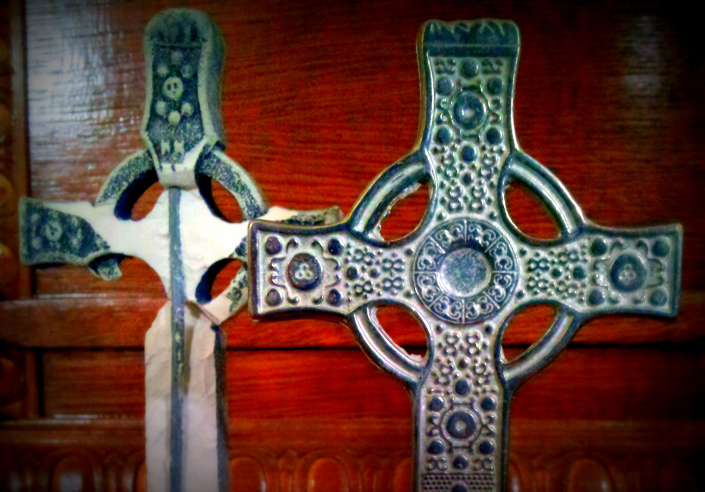
In the joy only a 21-month-old is capable of at successfully worming his way into papa’s inner sanctum, he began to explore its secrets and soon made his way to that low table that had so many wonderful things lying on it. Amid the prayerbooks, candles and even a brass hand censer was a ceramic Celtic standing cross papa had brought back from the holy island of Iona many years before and thousands of miles away. He did not know that his big sister had, a few years before, approached that same table, opened up the little bottles she found there and actually swallowed some of the soil brought back from that same holy place. He laid hold of the ceramic cross and swung it around in happiness.
He did not know that it would break so easily.
The broken cross has been sitting on my desk at home for the past couple of weeks, and when I came home from a short trip to discover it had been broken, my heart sank. Losing it made me quite sad, and I posted briefly about it online, noting that the experience tested my ability to be non-possessive.
It was irreplaceable. I had gotten that standing St. John’s Cross when I went on pilgrimage to the British Isles in 2001.
That pilgrimage was transformative for me. I had just graduated college (finally), still sorrowful and a bit mopey from the break-up a few months before with a girlfriend I’d dated for about a year and a half. My parents bought me the plane ticket, and I spent nearly a month traveling around the British Isles—in England, Scotland and Ireland—visiting holy places and doing a little touristy sight-seeing, as well. Spending nearly a month traveling mostly alone, breathing the air of a country I’d read about all my life, connecting with places that for me had been just legends in my heart—all these renewed my faith in a way that no convincing argument or even reading ever could.
I foolishly bought a few t-shirts as souvenirs, but I also got a few more lasting things, as well. On the little island of Iona, where St. Columba began his holy exile and from where he converted Scotland to Christ, I got that cross, a small replica of a large standing cross that is not far from Iona Abbey.
After I got back that summer, I wondered for a while if I’d reconnect with that young lady, eventually moved on and tried with another I met through church, though that one didn’t work out, either. The following April, I met my wife. I didn’t know it was her, of course, and it turns out we’d met before, though, to this day, neither of us remembers that earlier meeting.
Our first in-person meeting (that we can recall) was at Global Village Organic Coffee (a.k.a. “Tree-hugger Coffee”) in Raleigh, North Carolina. I’d been going there for a couple years by that point (from its opening day, in fact), and I’d been a customer for some years at the coffeehouse that had previously been housed in the same space. I also frequently talked with the proprietor Mike, a devout Catholic. So this was good ground for me to meet a girl—public, comfortable, hospitable. We talked mainly about the Church, and I invited her to come sometime. She did. And I’m glad she did.
 Over the years, those souvenirs—souvenir; French for “I remember”—were a reminder of what God had done for a beat-up heart, a child just a few years old in His Church. That pilgrimage steadied (and I hope, deepened) me for what was to come—manhood, marriage, seminary, priesthood, fatherhood, parish ministry. There have been many bumps and bruises along the way. Many. And a lot of them have been self-inflicted. I’ve failed at all those things.
Some of those failures are ongoing, and I’m not sure yet how to overcome a few.
So yesterday, I was at the post office to drop off some letters and packages, and I brought with me one of those “sorry you weren’t there” notes that the mail carrier leaves when he can’t deliver a package. I had no idea what the package was. I just found the note at the church. I must admit to being a little annoyed when I found it, because deliveries to the church are unreliable like that. I always get packages sent to my home. But I gave the slip to the woman behind the counter, and she found the package and handed it to me.
It had a customs notice on the outside, and I could see that it had been shipped from the little town of Oban—of all places. I’d been there. That was the final mainland stop in Scotland for those journeying to Iona. A ferry, a bus ride, and another ferry, and you were there. Oban? Who was shipping me something from Oban?
I brought it home and opened it up. Inside was a St. John’s Cross, almost just like the one my little boy had unknowingly broken, but made of pewter. A packing slip was included, and the billing name and address were those of Mike, the Raleigh coffeehouse owner. I haven’t frequented his shop in nearly ten years, but we’d reconnected on Facebook a couple of years ago. He must have seen my little lament about the cross.
Putting all these various narrative strands together doesn’t quite add up to a particular story, but when I opened the package and saw the cross, I was moved enough that I began to wonder how to make sense of these pieces of the story that are indeed all connected in one way or another. And it occurred to me that what weaves them together is precisely the Cross.
As anyone who attempts to be serious about Christian faith experiences at various points in life, crucifixion is required. The Lord says, after all, that anyone who would come after Him has to take up his cross and follow Him. We can sometimes romanticize what this must be like, that we are going to be suffering for a Cause, perhaps. But the biggest cross that I have to take up and carry to Golgotha really is my vanity, my pride, my desire to be right—and my need to, well, need.
And I also remember that those around me are carrying crosses, too.
It is no accident, I think, that this holy object—just an object, yes, but nonetheless one that is holy—connects between so many different times of transition: coming of age, confirming my faith, getting married, being a husband, being a father, being a priest. For the Christian, the gift of the Cross of Christ is always a crossroads.
And we keep returning to the Cross until that final Day, which is coming and now is, when the dead will hear the voice of the Son of God and live.
Share this:
12 Reasons Why I Became and/or Remain an Orthodox Christian
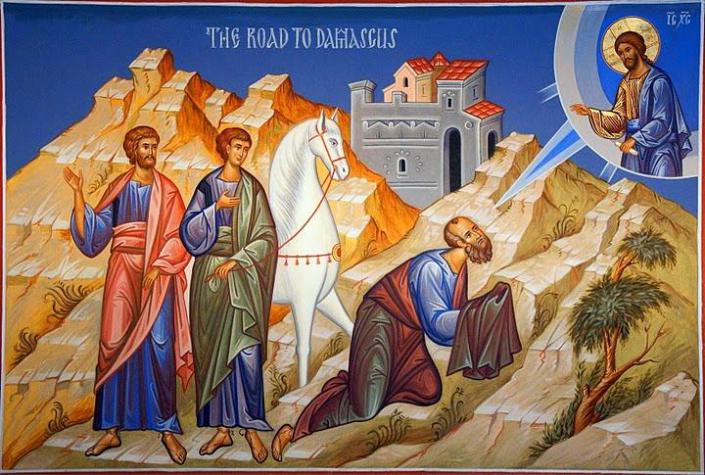
Lists like this are usually so much clickbait, I know, but I thought it was nevertheless worthwhile to compile a list of most of the reasons why I became and/or remain an Orthodox Christian. Some of these things were not really on my radar when I became Orthodox in 1998, but they are part of the reason why I genuinely do love belonging to the Orthodox Church (which is why “and/or Remain” is in the title).
The nature of lists like this is such that they can’t constitute apologetics, really, nor is this one (at least) intended to be universally applicable — these are my reasons. They may not be someone else’s. It will also become apparent that my background as an Evangelical prior to becoming Orthodox is a major factor here. So, all that said, here’s the list.
1. I believe the Orthodox Church really is the one, true Church of Christ.
There’s a lot that could be said here, but the reason why I believe this is that I examined both the Scriptures and the early history of Christianity, and I became convinced that the only church that matches them both is Orthodoxy. Particularly formative for me were the writings of St. Ignatius of Antioch, a disciple of the Apostle John. The church life he described was definitely not what I saw in Evangelicalism. Since he was someone who learned how to be a Christian from the Apostles themselves, I wanted to be in his church.
Orthodoxy takes history seriously and doesn’t gloss over the hard stuff. It also doesn’t pick and choose from early Christian witness to develop a streamlined “system” of theology that is easy to swallow. Rather, because Orthodoxy is truly the community descended from the Apostles, within its theological memory are centuries of dogma, doctrine and theological reflection. Not all of it is totally consistent or easy to sort out, but it is nevertheless one great river of truth with an overall unified direction. One doesn’t see that in the same way in Roman Catholicism (there are several major turns in history), and it is impossible to find that in Protestantism. Most Protestants aren’t even concerned with it.
None of that means I regard non-Orthodox Christians as damned, nor do I even regard all Orthodox Christians as definitely destined for eternal bliss. And Orthodoxy’s truth is no testament to me. Orthodoxy is true, but not because of me.
2. Orthodoxy gives me something to do.
I don’t mean that I was bored and needed something to entertain me. I mean that the Christian life as I had been taught it prior to becoming Orthodox was essentially non-critical. I had been “saved,” and there was really nothing critical to do after that. I should try to be moral, of course, and get other people to get saved, too, but those things weren’t really necessary to the big question, which was: “Do you know what would happen to you if you died tonight?” Well, I knew. I was “saved.” I was going to Heaven.
But what if spiritual life is actually all critical? What if you need to endure to the end to be saved? What if being a Christian means working out your salvation with fear and trembling? Orthodoxy provides a full-bodied, full-souled spiritual life that assumes that everything you do as a Christian makes you either more like God or less like Him, and because becoming like God is what salvation consists of, that means that everything you do is critical. You haven’t “arrived” in this life. You should be moral and you should be evangelistic not because they get you bigger rewards in Heaven but because those things are part of what it means to cooperate with God so that you can be saved.
3. Orthodoxy gives me a way to see and touch God physically.
The Son of God became the Son of Mary, and that means that He became visible and touchable. In Orthodoxy, the implications of the doctrine of the Incarnation are that the divine presence — holiness — actually becomes present in the material world. Now, one can argue that that presence is uniquely present only in one physical place — the human body of Jesus — or one can be consistent and see how holiness shows forth in lots of other physical places both in the Bible and in subsequent Christian history. Saints’ bones, apostles’ shadows and even handkerchiefs touched by apostles have all showed forth the power of God.
Within that context, when Jesus said “This is My Body” and “This is My Blood,” it makes more sense to take Him seriously and not just metaphorically. That’s why St. Paul warned that people who received Holy Communion unworthily could get sick or even die. If it’s “just” a symbol, why would it do that?
The physicality of Orthodoxy — sacraments, incense, vestments, church architecture, icons, etc. — don’t get between me and God. They put me in touch with God. A bridge between two cliffs does not get between the cliffs but rather connects them. Orthodoxy’s many physical elements not manmade magic, but the working out of God’s gift of the Incarnation, the reconnecting of God and man.
4. Change is really hard.
People sometimes joke that Orthodoxy is not really an “organized religion,” with emphasis on “organized.” There is no pope handing down uniform instructions to the whole Church; our chiefest prelates often can’t seem to get along; and it seems like we’re never going to get around to holding that Great and Holy Council we’ve been talking about for nearly a century. But all those things don’t bother me. For one thing, it means that sheer logistics make it nearly impossible for us to alter what we do.
And if all that Eternity and Truth stuff is really true, why should we even think about altering it? It can’t get voted on democratically, and it can’t get imposed monarchically. So change doesn’t much happen. That’s not a bug. It’s a feature. Orthodoxy is not going to change out from under you.
That lack of organization also leads me to love Orthodoxy for another reason, too:
5. Orthodoxy really is one Church.
Unlike the denominationalism of the Protestant world, the various churches of Orthodoxy really do have to talk to each other and work things out. A Presbyterian and a Lutheran may each recognize each other as Christian, but they have almost no stake in each other’s internal church life. The same even holds true of someone belonging to the PCA and someone belonging to the PCUSA (both Presbyterian denominations). They don’t have to work anything out between them. A PCA church plant does not in any way infringe on the territory of the PCUSA, because they’re not the same church.
Orthodoxy may often bicker and fight (though most parishioners never see this unless they happen to be in a dysfunctional parish), but the fact that we have such bickering and fighting with each other means that we recognize in each other that we are one Church, that we have a problem and that we need to fix it. Protestants always have the option of just splitting (and once splits occur, they don’t have to bother with each other), while Roman Catholics can ultimately appeal to the Vatican, who can impose solutions that work for the Vatican but might not work for everyone else involved.
6. Orthodoxy is a faith for the whole life.
Because Orthodoxy comes with a vast set of expressions of its tradition, you can never exhaust it all. There is always something new not just to learn but to become. While we don’t really “arrive” until the next life (and I’d argue even that is not an arrival; that is, it’s not the end of the road of salvation), there are many way-stations in this life that delight and grant joy. The difference between Orthodoxy and Evangelicalism in this regard is that I’m talking about not just growing in wisdom, which is common to all religious traditions, but that Orthodoxy tracks many stages of spiritual development throughout a whole lifetime.
I remember one time hearing a monk explain the response he got from a holy elder on Mount Athos after asking him many questions. The elder replied that some things just wouldn’t make sense to him until later, until he’d received some level of illumination (theoria). It’s true. One cannot read a “Statement of Faith” from Orthodoxy (not even the Creed) and say, “Ah, yes. That is everything Orthodoxy teaches. I understand it now.”
Again, that’s not a bug. It’s a feature. Yes, we like things to be simple, to be readily accessible to everyone, but any faith that is not complex enough to address all the complexities of human experience is not worthy of the dignity of mankind. Orthodoxy provides that in a way that I haven’t found anywhere else.
7. Orthodoxy is a faith for the whole world.
There are no “target demographics” for Orthodoxy. We don’t do market research to figure out how to attract young people, old people, urban people, suburban people, or whatever particular demographic we might desire for our parish. A parish can often have a certain degree of commonality among members, but that isn’t by inherent design. There was no committee that met saying, “How do we get the 30-something suburbanites?”
Yes, Orthodoxy is sometimes plagued with ethnocentrism. But that’s a distortion of Orthodoxy, not faithfulness to it. And it’s not everywhere. I’ve belonged to both more ethnically focused and less ethnically focused, as well as ethnically non-focused Orthodox parishes, and none of them had an ethnic membership card check at the door. Orthodoxy is really a universal faith that has shaped numerous cultures and languages over many centuries.
If people as diverse as Arabs, Greeks, Serbs, Georgians, Russians, Estonians and Finns can all sing the same faith, and if both their young and old can sing it together, then truly, anyone is welcome. (Some Orthodox need to remember that more than others, though.)
8. Orthodoxy is a faith for the whole person.
Mankind is not just emotionally moved by beauty, but he aches to be near it, to create it as much as that is possible. More than any other iteration of Christian faith, the Orthodox Church knows how to envelop the worshiper with beauty in all five (or more!) senses, both otherworldly beauty that transports the worshiper and otherworldly beauty that transforms the earthly.
One might describe this as aesthetic, but it is not “mere” aesthetics in the sense of something that appeals only to the senses, perhaps for entertainment value, but goes nowhere in particular. This is aesthetic in the sense that God Himself is beauty. That is why Orthodoxy, while sometimes homely or homey, is never cheesy. It is timely and timeless, but not “contemporary.”
The beauty of Orthodoxy addresses the whole human person in multiple ways. It is not a faith just for the “soul” or the “heart,” but for the body, as well, including our ability to apprehend beauty.
9. God really does love you the way you are, and He loves you so much, He won’t leave you that way.
There seems to be a constant battle these days, especially within Protestantism, over whether God should be perceived as loving or as a judge. Even those who preach that God is love still tend to preach a God Who is angry at you for your sins and has to be appeased. But Orthodoxy preaches the God Who is consistently loving, a God Who loves with such strength that His love will change you, if only you will cooperate with it. The change won’t be lousy, either, turning you into some goody-goody prude. Rather, it will be a change into authentic personhood, where virtue is striven for because of communion, not because of adherence to arbitrary rules.
10. Orthodoxy is both mystical and rational.
Some Orthodox will oppose the mystical to the rational, but that’s a mistake, I believe. For all the apophatic theology (theology which emphasizes our inability to know God with our minds), there is also a lot of cataphatic theology (theology that makes clear, positive truth claims) in the tradition of the Church. We don’t have to choose one or the other, nor are the two really alternatives to each other. Apophatic theology is also not merely a “corrective” to cataphatic theology. Rather, both are simply ways of talking about theological emphases within Orthodoxy.
It is not as though, when I am serving the Divine Liturgy, I switch on the “rational” part when preaching the Gospel and then toggle the switch to “mystical” when I drink from the Chalice. All these things are in play simultaneously. I love that, and I haven’t really encountered that anywhere but in the Orthodox Church.
11. Orthodoxy is ascetical.
No Christian body takes asceticism as seriously as Orthodoxy does. Roman Catholicism has it in its tradition, but it is mostly ignored. Yet Orthodoxy expects all Christians to fast, to stand vigil, to be as non-possessive as possible, etc., and it provides a programme for how to do that. You don’t have to make it up for yourself, because the tradition is already established. And it’s also customizable according to the pastoral discernment of your father-confessor.
Asceticism is a way to do real battle with the broken modes that the human will functions in. It allows a man to take control of himself in a powerful way so that he can redirect his God-given powers and energies back toward God and away from his base appetites. Asceticism doesn’t save anyone, but it certainly does help. Why? Because we are only saved to the degree that we want it. Asceticism helps us to want it.
And as anyone who has really fasted for all of Lent and then tasted that first taste of roast lamb at Pascha can tell you, asceticism actually makes the good things of this earth taste better. Far from being a denigration of God’s good creation, asceticism returns the creation to us and opens up its beauty in ways that consuming it without restraint cannot ever do.
12. Orthodoxy aims higher than any other Christian faith.
While theosis (deification/divinization) is not the only model of salvation in Orthodox Christian theology, it certainly makes some of the strongest claims. There are hints at doctrines of theosis in Roman Catholicism. (I am not aware of any Protestant groups that teach it.) Yet it is only in Orthodoxy that one is taught that salvation means to become by grace what Christ is by nature, that “God became man so that man might become divine” (Athanasius, On the Incarnation) that becoming “partakers of the divine nature” (2 Pet. 1:4) is actually expounded upon. “I have said, ‘ye are gods, and all of you are sons of the Most High’” (Ps. 82:6) is taken very seriously. You won’t find that anywhere else.
Even Pentecostals who teach that you can be chosen by God, spoken through by God, etc., aren’t really teaching that you can enter into such union with God that you begin to take on the divine attributes. But that is exactly what Orthodoxy teaches, that the transfiguration, death, resurrection and ascension of Christ are all what it truly means to be a Christian, that mankind is now seated on the very Throne of God Himself, and being in Christ means being seated there, too.
Pretty daring. But why settle for less?
So those are some of my reasons. What are yours?
Share this:
Meeting the Lord
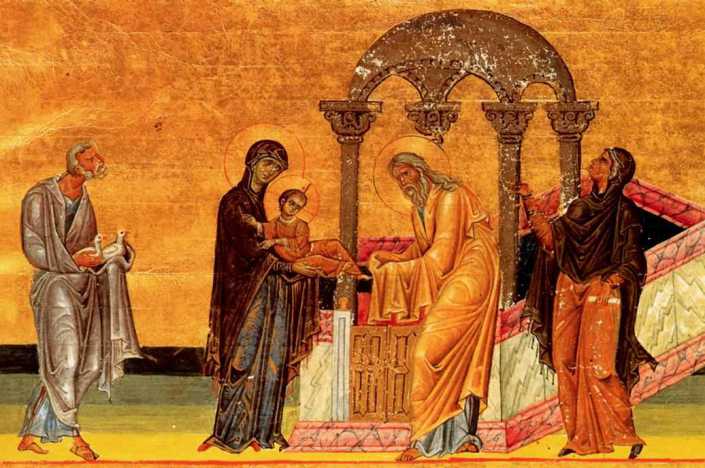
Meeting of the Lord in the Temple, February 2, 2014
Rev. Fr. Andrew Stephen Damick
In the name of the Father and of the Son and of the Holy Spirit, one God. Amen.
We arrive now at the fortieth day from our Lord’s birth, when His mother and foster father Joseph bring Him to the Temple in Jerusalem to fulfill what was written in the Law of Moses concerning the first-born son of any family, that he should be dedicated to the Lord and a worthy sacrifice be offered as part of this special moment in the life of the family. The Lord Jesus is received there into the arms of the righteous Simeon, who had been waiting to see the promised Messiah for many long years and then prophesied about what was to come for this newly-born King of the Jews.
There is so much that may be said here that we do not have time to say it all, but today, on this great feast, I would like us to meditate on a few things.
First, we are brought to consider that this same custom is retained in the Orthodox Church, though it is altered in a few ways. On the fortieth day from a child’s birth, he and his mother come to the church and are received there by the priest. The priest prays over both the child and his mother, and then carries the child into the church temple.
The prayers for the mother are said to provide a preparation for her to be received back into the communion of the Eucharist. She has stayed home for these forty days and has been out of communion for an extended time. Normally, when someone has been absent from communion for at least three Sundays, he is in essence excommunicated and needs to be brought back in to communion through the mystery of confession. But a new mother has been absent from communion involuntarily and for a laudable reason. Yet that separation has occurred. Thus, instead of receiving her back into communion through confession, these special prayers are said on the fortieth day from her giving birth.
Prayers are also said for the child, and there is variation here between different Orthodox traditions. In some cases, these prayers of “churching” are done only after the child has been baptized. In our tradition, however, these prayers are said before the baptism and include content hoping that the child will soon be baptized, which can occur even immediately. Indeed, for many reasons it is preferable to baptize a child as soon as possible after this point.
I want to draw our attention to one particular detail here, one of the ways in which the Church has altered the Jewish custom. In the Law of Moses, it is only the first-born son who is brought in this way into the Temple. Yet we bring every child, whether boy or girl, first-born or last-born. Why is that?
It is because the reason we bring children to the church temple on their fortieth day includes not only the Jewish notion of dedication to God and thanksgiving for the birth of a child, but also we add to it identification with Christ. Jews dedicated the first-born sons because Moses told them to, but we Christians dedicate all our children because Christ Himself deigned to be dedicated in this way. And imitating Christ and becoming one with Christ is available not only to first-born sons but to every human person.
This broadening of such customs fits in with the larger narrative of how the Church has appropriated and received its Jewish inheritance. Prior to the coming of Christ, the Jews were the chosen people and had access to a revelation not given to the rest of mankind. But with the coming of Christ, the age of the New Israel is inaugurated, and every human person is now welcome to enter into the New Israel, whatever his nationality, ethnicity or status from birth. There is no one who cannot become one with Christ. And so we bring all of our children to begin their life of becoming one with Christ by this custom of dedication on the fortieth day from their birth.
Besides our personal connection with this feast, however, there is also something cosmic going on. This is not only a moment that each of us can connect to individually, but it is a moment in the Big Story, the story of how God is saving the world, which is what gives it its power and meaning. When we bring our forty day old children to be dedicated here in this holy temple, we are not only asking for a blessing for them and their mothers but we are also entering them into the cosmic narrative of salvation itself.
For we see here the passing of one covenant and the inauguration of another. The Old Covenant, represented here in the person of Simeon, is nearing its final days. The age of the ethnic, biological definition of Israel is coming to a close, and a age of entrance into the New Israel through baptism is now dawning. The age of shadows and figures is passing, and the age of direct revelation in its fullness has now come.
Here in that Temple in Jerusalem that was made for the worship of God before the Incarnation now comes the incarnate God-man Himself. He is being dedicated to the Lord, but He is Himself the Lord. This earthly mother, accompanied by a foster-father, offers Him up to the heavenly Father, and He is offered up in the Temple that was made to worship Him.
Here, the Creator is being held in the arms of His creation. Here, the One Who is infinite and omnipotent appears as finite and helpless, sheltered from harm in the arms of His own creatures, whom He Himself shelters from harm. His parents come full of hope for the future of this child, and yet it is He Who is hope itself, the hope of all the ends of the earth, the hope of every creature.
It is such a beautiful, powerful moment. I love this feast because of how tenderly, how gently, how poetically it teaches us about the incarnation of the Son of God, met here in the Temple as both the Son of God and the Son of Mary.
As we contemplate this great feast of the Church, we should see ourselves becoming part of this story. The Meeting of the Lord in the Temple is not just “the reason” that we bring forty day old babies to the Church, though we can indeed understand it that way. Rather, this is one of many ways in which we enter into the life of Christ.
Because He is born into this world, we meet Him there. When He is dedicated in the Temple, we meet Him there. When He is baptized, we meet Him there. When He suffers and dies, we meet Him there. And when He is raised from the dead and ascends into Heaven, we meet Him there. Wherever Christ is, that is where we long to be.
We join ourselves to every part of His life and experience, not just in terms of mental remembrance but in mystical solidarity and identity with the God Who became man. We go to be with Him because we want to know Him, to be one with Him, to receive the divine power by grace that is His by nature.
And so here we have another opportunity to meet Him. So let us go out to meet Him, this Lord of glory Who became incarnate as a little child and is now being brought by His blessed mother and His righteous foster father into the Temple of His own glory.
Let us not only dedicate our little children in imitation of Christ’s dedication, but let us dedicate ourselves—perhaps again, perhaps for the first time—so that we may also be found held in the arms of the righteous Simeon, so that we also may see the salvation that he saw and know the mercy and peace and beauty of the Lord that will last not only into our departure from this life as it did with him, but also through all eternity.
To our Lord Jesus Christ therefore be all glory, honor and worship, with His Father and Holy Spirit, now and ever, and unto ages of ages. Amen.
Share this:
- ← Previous
- 1
- 2
- 3
- …
- 27
- Next →
