Culture
“We speak one language: Antiochian”: More Thoughts on the Future of the Antiochian Archdiocese and Orthodoxy in America
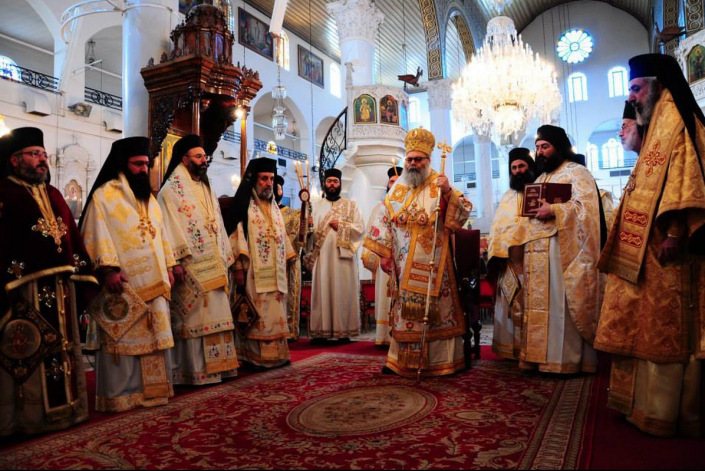
If you’ve done any reading from modern Orthodox saints, you know that there is a certain tone among the holy elders of Greece, another from Russia and so forth. Each culture enculturates the Gospel in its own authentic way and speaks of the truth of Jesus Christ with its own voice.
One of the things which makes the particular Antiochian voice distinct—although it is often not well known here in America, as I wrote in my previous post—is that it is not tied to any single ethnicity or culture. The ancient cultures and languages that have called Antiochian Orthodoxy home are diverse—Syriac, Greek, Georgian, Arabic, Cypriot, Central Asian—as are those which now are also home to the Antiochian church—English, American, Central and South American, Turkish, Australian, French, German and others. Ancient Antioch itself was a cosmopolitan city even in the time of the Apostles, and while the city of Antioch of today is now a small Turkish municipality, the spirit of Antiochian identity in its Christian form has remained cosmopolitan and multicultural. Some folks today equate Antiochian with Arabic, but that identification has never really been accurate.
Indeed, one of the greatest voices of the Antiochian church in America, St. Raphael of Brooklyn, regarded himself as being a man who identified with many peoples: “I am an Arab by birth, a Greek by primary education, an American by residence, a Russian at heart, and a Slav in soul.”
Yet while the voice of the Antiochian tradition is spoken in many languages and cultures, there is nevertheless a single “Antiochian language,” so to speak, a particular way of being and speaking in the Orthodox Church that is distinct.
I have been talking about this “Antiochian language” recently with friends who know it far better than I, and one of them mentioned to me a phrase used in the Arabic-language publishing and social media of the patriarchate, which gives this post its title: “We speak one language: Antiochian.” It has also been rendered in English as “Our Language is Antiochian. Our Language is One.” This certainly is not a reference to the Arabic language but rather to a kind of spiritual language, that particular voice which is the spirit of Antioch.
With the attention that our archdiocese here in America has received lately from the Patriarchate of Antioch, our connection to that Antiochian language has been strengthened, and I’ve noticed a particular tone—hard to describe, but definitely distinct. If I had to put adjectives to it, I might choose: accessible, direct, refreshing, bright, earthy, peaceful. It is not dark or hard, but it is also not too yielding or liberal. It is loving and un-self-conscious.
A bridge is being built between ancient Antioch and her children here in North America, and now there is traffic on that bridge, a kind of spiritual commerce and economy that has its own idiom. For many, this may be the first time that someone has “spoken Antiochian” to them. It is not that this has been absent from our archdiocese, but we have simply not had access to it in the way that we have over the past several weeks.
As I said, though, that voice is hard to define with adjectives, so I would like to give a few samples, both ancient and modern, which to me all sing in the same spiritual key, which speak with the same spiritual voice. The subjects are different, but the tone (to me) is the same:
Blessed is the person who has consented to become the close friend of faith and of prayer: he lives in singlemindedness and makes prayer and faith stop by with him. Prayer that rises up in someone’s heart serves to open up for us the door of heaven: that person stands in converse with the Divinity and gives pleasure to the Son of God. Prayer makes peace with the Lord’s anger and with the vehemence of His wrath. In this way too, tears that well up in the eyes can open the door of compassion.
- St. Ephrem the Syrian, “Armenian Hymn No. 1,” 4th c.
St. Ephrem is of course familiar to many Orthodox Christians, and he is not often thought of as “Antiochian” exactly, but this tone is still there. (And one recognizes the Semitic image of God’s “wrath” there, of course.) I especially love the phrase “close friend of faith and of prayer.”
Fast forward several centuries, and that same feeling is still there. Here’s Sulayman al-Ghazzi (Solomon of Gaza), an Arabic-speaking Palestinian bishop from the 11th century:
Not all baptized with water are Christians
Without the baptism of the life of the world to come;
In Christ the peoples of the earth have been baptized
Though some of them afterward showed hypocrisy.
They became like a body’s parts in its natural state—
Some helpful, some unreliable.
How many patriarchs are unpraiseworthy in their service,
Miserable bishops and metropolitans,
Who are among the heretics, in place of truth,
Preferring falsehood and slander!
Over them, God has favored a Church
Whose stones are gathered from all corners and climbs.
Truth has built her edifice
Rising to heaven on pillars and columns,
Fashioned from chrysolite,
Precious stones, sapphires, and pearls.
Her foundation is the rock of faith,
Rooted deep with pillars and walls.
All bodily creatures are pleased to see it
When it appears in races and colors,
Byzantines, Russians, and Franks
Joined with Indians, Khuzestanis, Abkhaz, and Alans
Armenians and Pechenegs in agreement
With the people of the Jazira, namely Harran.
And Copts too, in the Lower Egypt father together
From Upper Egypt to Qus and Aswan.
People of Shiraz and Ahwaz in harmony
With Iraq, unto furthest Khorasan.
From the place of the sunrise to the place of its setting,
To the Euphrates, to Sihon and Gihon.
White, blond, and brown in their churches
Praise God with the yellow and the black.
All of them have come to the religion of Christ
And are guided, gaining profit from loss.
Seventy nations, each with a language
Branching off from one Syriac tongue.[*]
Hebrew was the speech of God’s apostles
Before they set out with the mission of the Gospel.
Each apostle gained a language,
Beautiful, reliable, and clear.
Not out of weakness but having heard proof,
Those to whom they preached responded with faith.
So they spread out among their nations,
None fearing the devil’s wiles.
When their service to God was done, they slept,
Having roused many sleepers.- Suleyman al-Ghazzi, from “Not All Baptized with Water Are Christians” (trans. Samuel Noble), in The Orthodox Church in the Arab World 700-1700: An Anthology of Sources, pp. 163-164
[*] Medieval Arabs, both Muslim and Christian, generally held that Syriac was the language spoken by Adam and Eve.
And roughly 1,000 years later, we still hear this same direct, refreshing voice from the leaders of the Orthodox Youth Movement:
The Church is the salt of the earth and completes the work of Christ in the world. The Church works, she is present, for the sake of the salvation of the world. We can say that she is the center of being, in her its destiny is achieved. The world corrupts and ages, but the Church is continuously renewed for the sake of the salvation of the world. But if the salt is corrupted, then how can it be salty?
The Church is the group of those who believe in the Lord Jesus and who have united around him to live the life of the Gospel, the life of God. They have no concern except to follow the Lord’s teaching and to follow in his footsteps. The group is in the world and for the world, but at the same time it is not of the world. From the beginning, from the ascension of the Lord to heaven, it is oriented toward the age to come, awaiting the return of the heavenly bridegroom and hastening him on. From now on, it lives in the last days, in the fullness of time, “it uses this world as though it doesn’t use it, and buys as though it doesn’t own.”
- Fr. Elias Morcos, “On Revival in Antioch,” 1964
We become children of the Resurrection when we become bridges of communication and encounter between those who are separated, and between those who are in conflict. Let us be bridges exactly like the Lord who did not ask anything for Himself, but gave the world everything, to such an extent that He offered Himself for the salvation of the world. Let us serve as ways of rapprochement for all. Through love, sacrifice and in deeds and truth we shall build our countries.
We become children of Resurrection when we live our faith in genuineness, depth and meaningfulness. External expressions are bound to change with cultures and ways of living, but the genuine Christian content preserves the trust which has been handed down to the saints under many different circumstances, cases and cultures. Let us imitate the courage of Christ who did not fear anything, even death. Instead He faced the cross with love and brought us to resurrection. Let us face the cross of this crucified East with overwhelming love for all those who are crucified on it, until we reach with them the resurrection we all expect. Let us live these painful days in simplicity, enjoying the bare necessities of life and experiencing the true wealth which is life with God….
Last but not least, we do not forget that God is the Lord of history, so we may always hold to patience and hope which do not fade away. Let us remember the words of the prophets and how much they called, in times of distress, for repentance and faith, until God intervenes and removes the distress. In these troubled days we are witnessing, we are in sore need of faithful witnesses. Let us move out of our distress with more faith, more purity and greater loyalty. When we understand that we only need God and no one else, the effects of resurrection will appear in us and in all our humanity. When this happens all around us shall be transfigured.
- Patriarch John X (Yazigi) of Antioch, Pascha 2013 Pastoral Letter
How should I conduct myself at Pascha? I try to become the Gospel, to become the word so that people may read me and live. Christianity is faces that are illumined in order to give light. This is the living Pascha. It is what causes me to pass through people to the Father’s face. How should I live? “I do not live, it is Christ who lives in me.” Christianity is not a religious system. It is love- that is, clinging to Christ such that you forget your own face in order to see His face and the whole world in His face. If we are people of Pascha, then we are in a state of constantly going beyond ourselves and the world in order to become Him and for Him to become us. It is not a matter of systems and it is not a matter of theoretical principles. Everything is His face, until all faces pass away or we read Him traced upon them.
- Metropolitan Georges (Khodr) of Mount Lebanon, “Who Shall I Be at Pascha?“, 2014
And now this “Antiochian language” is also being spoken to us here directly in America by the representative of our patriarch:
Christ defeated death in our lives! He set us free from fear: from fearing death, from fearing evil, from fearing illness and calamities, from fearing each other, from fearing the uncertainty of the future, from fearing insecurity and unemployment, from fearing violence and terrorism, and from fearing persecution and sufferings for His sake. Instead, He gave us the power and the means to seek the true freedom. The freedom to love each other even though we differ in character, education and profession. The freedom to forgive each other even though we have suffered. The freedom to ask forgiveness from each other even though we have badly hurt each other. The freedom to serve each other even though we differ in origin, background and culture. The freedom to work together even though we differ in thinking, worldview, ability and capacity. The freedom to abide by the truth and raise our children to seek Him. The freedom to defend the unjust and the needy and restore them their rights. The freedom to be at the Lord’s hand, obedient, prayerful and faithful.
Christ defeated death in our reality! He gave us the gift to start anew, to renew our heart, to purify our mind, and to reaffirm our commitment of faith at His service. He restored in us the dignity of our person, the beauty of our nature, and the bounty in our personality.
Christ defeated death in our relationships! Christ is the only mediator between God and man. However, He made us “bridges” of salvation to reach others. As Antiochian Orthodox Christians in North America, we are bequeathed an apostolic “lineage:” tradition, inheritance and mission. In this regard, the image of the “bridge” summarizes the Antiochian witness that emerges out of the past, prompts the present and prepares the future of the Antiochian Orthodox Church on the eve of the election of a new Metropolitan to succeed to His Eminence, Metropolitan Philip of eternal memory.
- Metropolitan Silouan (Moussi) of Argentina, “How to Resurrect with Christ: Pascha 2014 Pastoral Letter“
I could give many, many more examples, and of course you can find a good bit of this sort of thing on the Notes on Arab Orthodoxy weblog. But I hope that these passages will suffice to give you some sense of the tone of “speaking Antiochian.” It is different from other languages, and while many of its speakers are these days from the Middle East, it is not the same thing as speaking Arabic, and there is no reason why non-Arabic speakers or people from outside the Middle East cannot speak it. It is a beautiful language, and it speaks to us of our Savior Jesus Christ with a peculiar accent and vocabulary of its own, itself building a bridge between persons, between peoples, and between mankind and God.
As I wrote last week, my hope for us Antiochians here in America is that we may hear more and more “speaking Antiochian” to us, so that we may better learn this beautiful language. And in so doing, not only will our own faith be strengthened, but we will also have something beautiful to offer to our Orthodox brothers and sisters throughout America.
Share this:

Raising Authentically Christian Children: Good News and Bad News
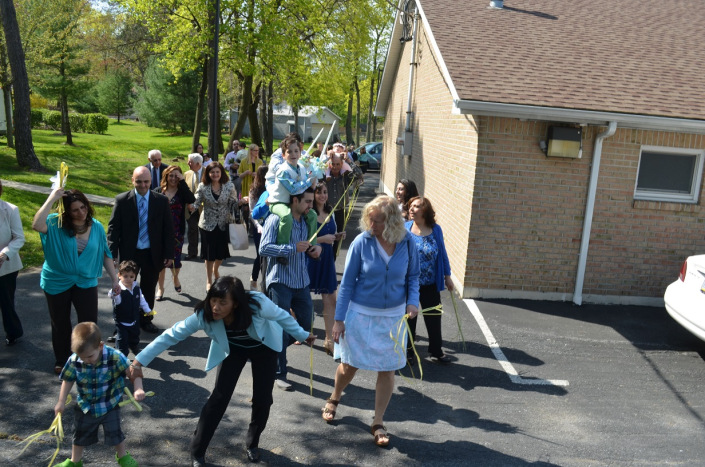
My friend Seraphim Danckaert published an article today on the O&H site that I think every Christian (Orthodox or not) should read: Losing our Religion: On “Retaining” Young People in the Orthodox Church. Why? Almost every kind of church throughout America is losing kids. So read it first before reading the rest of this.
Okay, done?
First, some bad news: If you’re counting on your church having awesome programs for your kids to make them be and keep them being good Christians, you’re going to be let down. There is only so much they can do, and expecting that they will do all the heavy lifting in your child’s spiritual life is extremely unrealistic. On a personal note, I’ve spoken with many 20- and 30-somethings who were very active in youth groups, Bible studies, outreach projects, etc., who all checked out of church after they left home. Their problem wasn’t that they weren’t active in public religiosity. It goes deeper, to the day to day stuff. Follow the path home. That’s where they learned to be adults. If the faith isn’t visible at home, which should be regarded as a “little church,” then it’s not going to be visible when your children start their own homes. You cannot outsource the spiritual side of parenting. And simply taking them to Sunday School (even consistently, which itself doesn’t seem to happen often any more) isn’t enough, either.
Okay, some good news: This piece is good news for all those parents who are striving to make their faith real in the home. Mothers especially are the heroes here, but fathers are critical, as well. Pray together with your kids, and not just over meals. Pray before they go to bed and at other times. Read the Bible to them. Read saints’ lives to them. Talk with them about what you read. Let your kids hear you talk about your faith, your hopes, your trust in God, your wish that you could spend more time in church, more time in prayer. Let them see you reading the Bible and other spiritual books. When you’re alone in your study and praying and your toddler sneaks in to play with forbidden things, pick him up and keep praying. All that agonizing you’re going through to make faith alive in your home is not in vain.
Another obvious conclusion is that you shouldn’t choose godparents for your kids based purely on familial or friend relationships. Your child needs to have an adult spiritual mentor who will model adult faith. Your pastor probably cannot be that person, not just because he cannot be an at-home part of your child’s life with great frequency but also because his status as a clergyman puts him outside the “role model” world for most kids. Most kids don’t imagine themselves as clergy, but they are more likely to imagine themselves to be like an aunt or uncle or close family friend. Imagination is critical in terms of spiritual possibility. If a child knows what it looks like to be a serious Christian adult, he’s more likely to be able to do it.
Regarding Seraphim’s third point, that a child needs not only authentic home spiritual life and a non-parent spiritual mentor, but that he also needs to have a spiritual experience of some kind before he hits his late teens, well, that can be a bit harder. You can’t make a kid experience the grace of God. But one thing we can count on is that there will be crises. And the direction we go when we experience a crisis will very much determine whether we experience grace. Do we model for our kids that we take such things to our pastors and into the sacrament of confession, that our first remedy is prayer and fasting? Or do we look for other solutions? (This is not to say that sometimes medical help may not be validly required, but it shouldn’t be sought out to the exclusion of spiritual guidance.) Someone who is raised going to confession regularly (not just once a year!) will likely think of his confessor as a go-to resource for dealing with a crisis. And while there’s no guarantee, he’s more likely to experience God’s grace there than if he turns to some other remedy.
I write all this in the context of working on the youth ministry in my own parish. It seems to me that it should probably mostly be geared to teaching how to make all these things a part of daily life, not just making time to get together and be spiritual and/or religious for a while and then go home. I also write this in the context of learning how to be a better father to three little Christians. I’m no expert. But I’m working on it. And I’m glad my wife is working hard on raising our children as Christians, too.
Share this:
Ten (Possibly) Surprising Facts about Fred Phelps
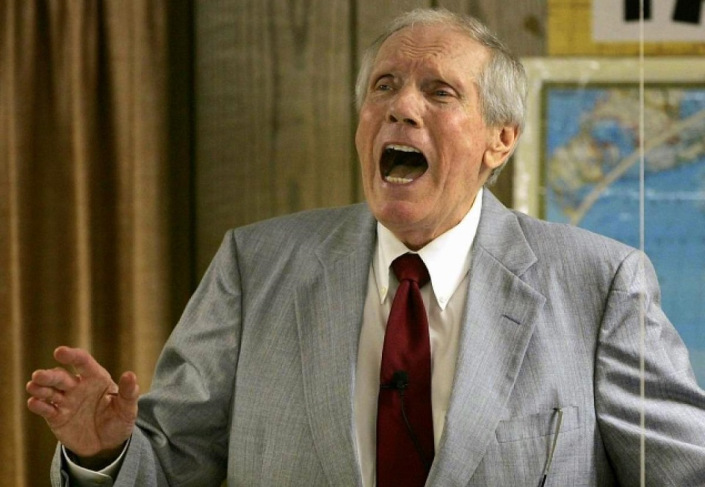
Besides being a heretical hate-monger who pushed the envelope of the definition of constitutionally protected speech, Fred Phelps, the late leader of the Westboro Baptist Church, had a number of perhaps surprising facets to his life. Here are ten of them, all culled from the Wikipedia article dedicated to him.
1. In the ’60s and ’70s, Phelps was a notable civil rights lawyer in Kansas, defending African-Americans against the “Jim Crow establishment” in the police and school system, as well as in public utilities and universities. He once said of his efforts, “I systematically brought down the Jim Crow laws of this town.”
2. In the 1980s, he won awards for his civil rights defense work from the Greater Kansas City Chapter of Blacks in Government and the Bonner Springs branch of the NAACP.
3. He once sued Ronald Reagan for appointing an ambassador to the Vatican, arguing that such an appointment violated the separation of church and state.
4. He was a Democrat, running for office in four different primaries (all lost), garnering as much as 30% of the vote in the Democratic primary for senator from Kansas.
5. He strongly believed in Five Point Calvinism, calling the Arminian doctrine opposed to it within Protestantism “worse blasphemy and heresy than that heard in all filthy Saturday night f*g bars in the aggregate in the world.”
6. He worked on Billy Graham crusades, though later denounced Graham as the “greatest false prophet since Balaam.”
7. In 1993, Phelps had a big blow-up on the Ricki Lake Show.
8. In 1997, Saddam Hussein gave Phelps’ church permission to come and preach in Baghdad. After Hussein’s execution in 2006, Phelps announced that Hussein was in Hell along with Gerald Ford.
9. The American Civil Liberties Union (ACLU) has filed multiple lawsuits defending Fred Phelps and his church for their picketing activities.
10. He may have been excommunicated from his own church in August of last year. No one seems to be saying why.
Given some of his earlier and more charitable history, is it possible that the excommunication was because Fred Phelps repented before the end? We may never know. One thing I believe, though, and that is that God loves Fred Phelps. Because He loves everyone, no exceptions.
Also: People are complicated, even people who present themselves as caricatures. We all have both evil and good within us. May God forgive and heal us of the evil and magnify the good.
Share this:
Thoughts from just south of Dunder Mifflin
I watched the series finale of “The Office” (US) last night (yes, after watching the entire series). And I have to admit that I got a little sentimental at all the Jim/Pam stuff of the last few episodes. I very much appreciated that, during the course of their marriage, the writers gave them some real problems and that Pam even says in the final episode that, while the documentary-viewers may have seen a “fairy tale” romance, it didn’t feel like a fairy tale much of the time.
One thing I liked (can’t remember which season it was) was that when Jim was presented with an easy opportunity to be unfaithful to his wife, he steadily and strongly resisted it. The writers didn’t just decide to mess with their marriage in that way just to watch everything blow up.
I also liked that there were real impasse-type problems between them in the last season, stuff that was based on whether personal fulfillment would compete with what it took to take care of the family, and that the choice was actually made not to “follow the dream” while leaving the family behind.
Indeed, “follow your dream no matter what” actually doesn’t come out too well as a theme in the series in general. I liked that, too, because that philosophy can be spiritually deadly. There was also a wonderful theme of reconciliation with and even kindness to enemies. Jim and Dwight eventually become actual friends, because both see in each other their own humanity.
And there are even real consequences for those who give in to addictions or foolish whims, whatever they might be. Andy doesn’t get to keep Erin. The Senator doesn’t end up with Oscar or get to keep Angela. Even when people overindulge in eating or drinking, it always turns out badly. And hard work and loyalty eventually do result in reward.
Although the telos of Jim and Pam’s relationship seems to be mainly “You are my everything,” etc., this may be the first time I’ve seen something approaching a somewhat realistic and positive view of marriage on television.
Yes, there’s some crude humor throughout the series, and that’s a drawback, but overall, I think the reason why that show went for nine years is that in many moments it spoke to a humanity that doesn’t fit into the stereotypes that TV usually presents, nor even to the consumerist mold that is normally promoted in that medium.
Good show.
